

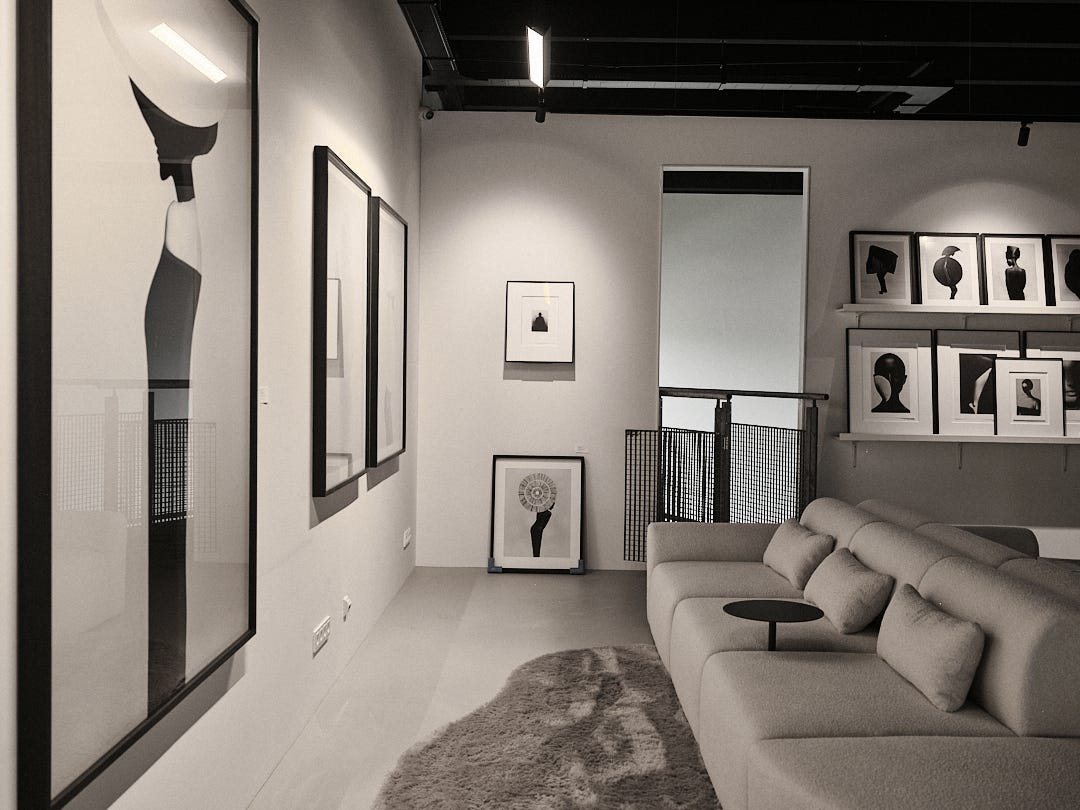
A photograph is nothing until it is printed.
Until then, it is data. Light captured and stored in a pattern, waiting.I am a photographer working out of a studio in Alkmaar, in the Netherlands. For about fifteen years I have built bodies of work, mostly in black and white, that end up as books, gallery shows, and prints on collectors’ walls. Portraits. Travel series. Slower studies made closer to home. The medium shifts, the geography shifts. The destination stays the same. The work ends on paper.
It has to. That is the part of the practice I have come to understand most clearly. During a shoot, I am already building the image in my head. Sometimes I know, while we are still in the studio, that we have made something that will hold. But I almost never see the work before it has been printed. I see the digital file. I edit, sit with it, sequence it next to others. And then, often months later, the prints arrive at the studio, or I walk into a gallery on the morning of an installation, and I see them for the first time.
Every time, it lands.
The depth of the print, the richness of the tonal range, the way the image suddenly has weight. None of it was in the file.
I do not print my own work. I have a print lab that has been printing for me for fifteen years, and they are masters of their craft. People have talent for what they do. My talent is making pictures. Printing is its own discipline, its own lifetime of decisions and refinements. I leave it, gratefully, to someone who has chosen it as theirs. We barely make test prints anymore. In fifteen years, it has almost always gone right the first time.
The lab itself is a small space on the second floor of a building. Sterile, deeply organized. Prints and tests laid out everywhere you look. You can feel the focus in that room, the energy of printing as a practice. When we do test, it is because we are pushing into something new.
The paper I use for almost all of my regular work is Innova Baryta. It is the digital descendant of the baryta paper used in the darkroom, the same paper that defined so many of the photographs I grew up admiring. I chose it for its structure and its tonality. The old baryta prints have something I have never stopped chasing, and Innova Baryta is, for me, the closest a modern archival pigment print can come to that feeling. Everything is printed on Epson, archival pigment, on a paper that remembers what photography used to look like in the hand.
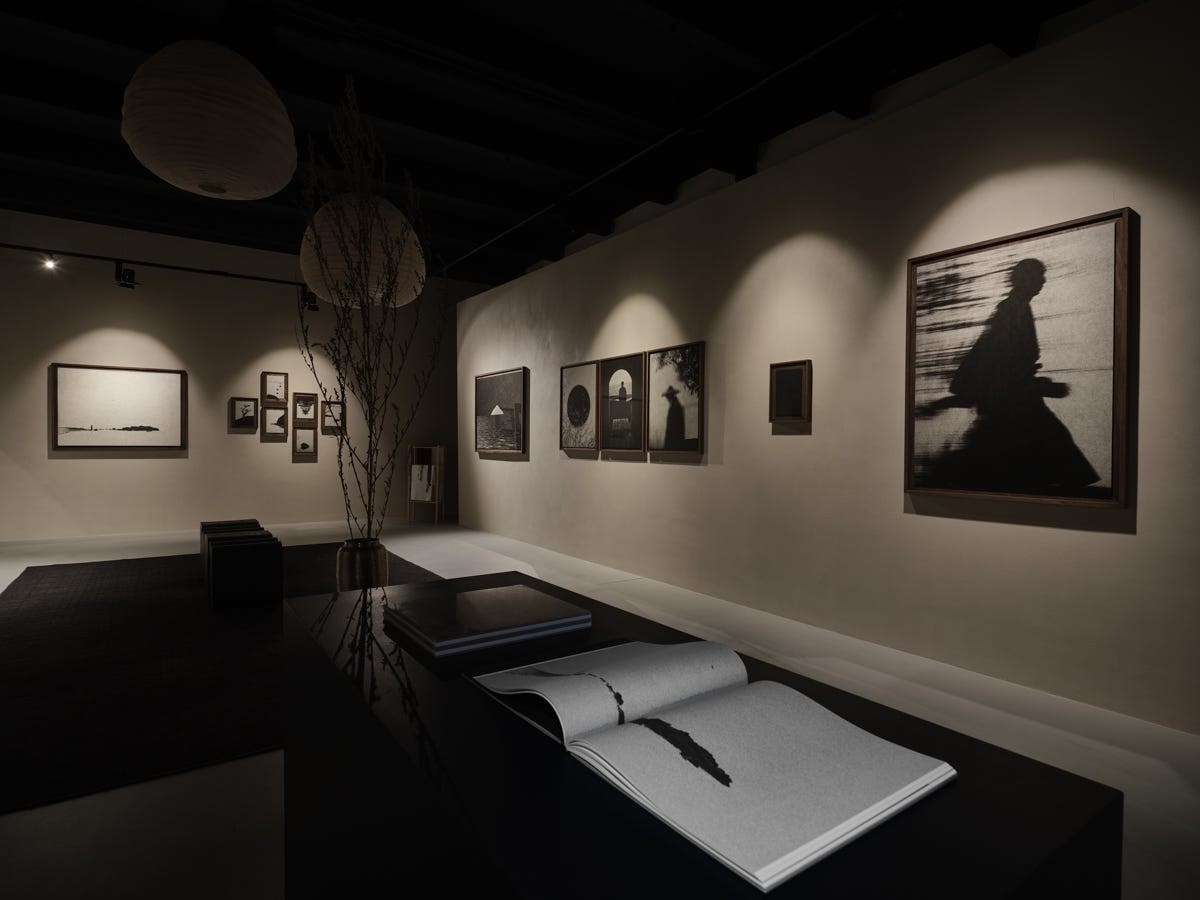
That choice was an intention. It was one of the defining decisions in the life of the work. The image is mine, but the object the viewer eventually holds, or stands in front of, is shaped just as much by the paper as by anything I did in the studio. The paper is part of the work.
Something larger presses against all of this, and it is why print matters now. We see something like a hundred images a day that leave nothing behind. A print stays. It hangs on a wall and ages with the room. It catches the light of one particular hour, the eye of one particular person, again and again, over years.
That permanence has become rare. We live inside a culture where almost everything we look at is designed to be replaced within seconds. Images come and go in the same breath. Nothing settles. And something in us notices.
Collecting, for me, is what happens when a person decides to live with an image instead of passing through it. You hang a print on a wall and see it every morning, every evening, in a hundred different lights. You age with it, and it ages with you. The work becomes part of the architecture of your days.
That choice is, at its root, a longing. A longing for presence in a world that has run out of it, for objects that hold in a culture that throws away. Print answers that longing in a way a file cannot.
It takes up space. It carries the fingerprints of the people who made it, and becomes part of a body of work and a life.
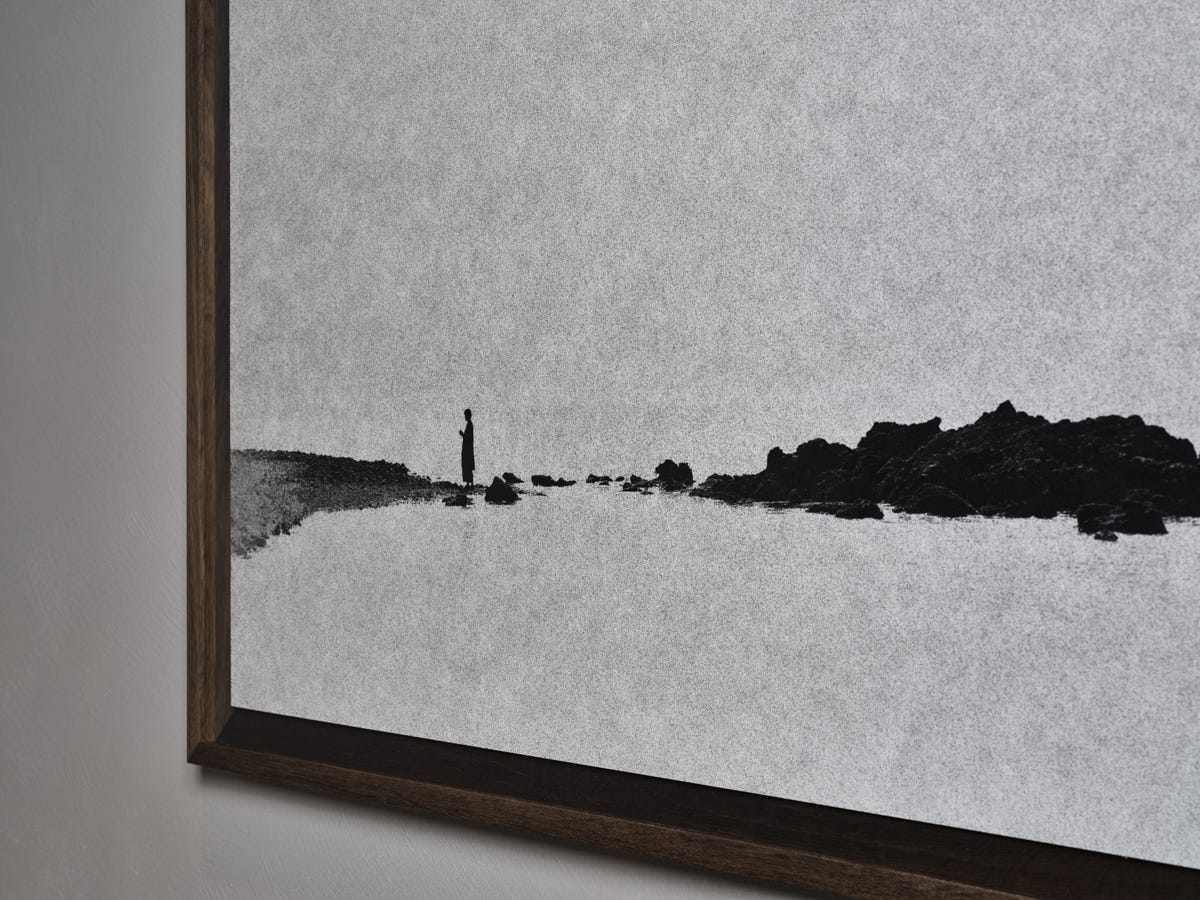
For my recent series Henro, shot in Japan, the paper and the printing technique went somewhere more specific. The work is printed on Awagami, a handmade Japanese paper, using a process called piezography, at a different studio than the one I have worked with for fifteen years. The same paper is now also where my AI-based work Echo From Beyond lives, as a single one-of-one print on one of the oldest media we have for an image.
That paper, that technique, and the studio behind it deserve their own piece.
Next time.
I wanted to thank Bastiaan for his contribution and support of the Paper Art’s Collective newsletter. Feel free to drop him questions below and be sure to take a look at Bastiaan’s substack newsletter to learn more about him, his photographic art, prints, and books.
Advanced Awagami Printing & Display
Awagami inkjet papers are a specialized medium for producing fine art digital prints. The range runs from subtle matte papers to highly textured dramatic papers. The papers also run the gamut from ultra-thin to extremely thick. The key to utilizing these unique and beautiful materials is matching the paper to a photograph and artistic vision that work in harmony.
This day-and-a-half hands-on workshop will result in two completed mounted Awagami fine art prints on two of Awagami’s most distinctive papers that best represent your artistic intention. More importantly, the experience with the selection, discernment, and realization of other participants’ art will be invaluable as you move forward using Awagami materials for future projects. We start preparations for this workshop before you come with a one-on-one review of images you have in mind for final mounted prints.
Details and registration are on the LPFA website. Take a look. If you have questions shoot us an email or leave a comment. You can also take a look at our first Advanced Awagami workshop.
Excellent insights, expressed so well. I find it quite interesting to ponder how we've been able to influence what we perceive over time. The innovations have sometimes been enormous and influence our culture profoundly. The reciprocal is also true of course, but the way our incentives are structured often leads us away from more life-enriching forms. I like how this piece does some work leading us towards those forms. Thanks.
Thank you for sharing my thoughts. 💭❤️