

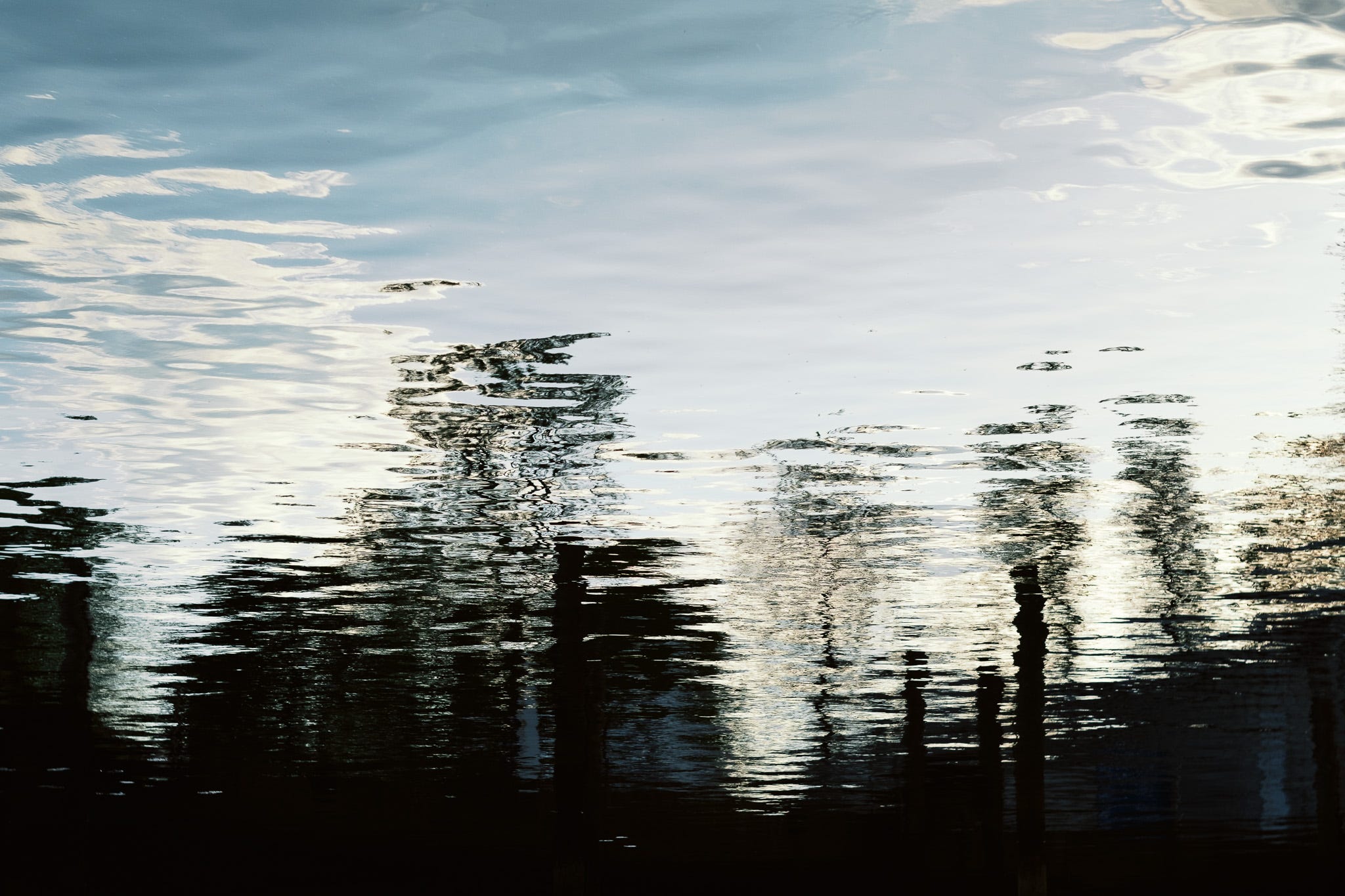
Let’s start with what Wabi-sabi is.
Wabi-sabi is a Japanese worldview centered on the acceptance of imperfection, impermanence, and incompleteness. It combines wabi (rustic simplicity or living humbly) and sabi (the beauty and patina that comes with age).
Core Principles - Impermanence: Recognizing that all things grow, decay, and change over time.
Imperfection: Valuing asymmetry, roughness, and flaws over rigid perfection.
Simplicity: Stripping away the unnecessary to focus on what is essential and modest.
—Wikipedia
As with almost any general philosophy, the principles are subject to interpretation when applied to a given specific endeavor. When applying wabi-sabi to photography there are a few ways you might apply the underlying principles. The first way might be looking at what subject matter you approach, literally using the principles as a guide to what you photograph. The next obvious application could be how you approach any particular subject. The last one could be some mix of both subject and approach.
If you do a search of something like “wabi-sabi photography” or “wabi-sabi photographer” the results will produce a giant diversity of work that represents all of the applications of those principles in various interpretations just enumerated. In a sense it is those core principles at play, or one particular interpretation of them, when I use my oft repeated phrase; “plain old pictures”.
Tuning out the virtual world in favor of the physical world
With all things in our modern world there’s a push to eliminate constraints. This is easy to see across the spectrum of photography starting with the gear we use. It’s all designed to eliminate every photographic constraint one could imagine. We’re sold any shutter speed, any aperture, any angle of view, with no constraints imposed. That’s not enough, in fact, the frame-rates, and codecs, and even RAW footage are captured before we even decide to release the shutter.
Forget that now, shutters and the notion of releasing them is passé, let there be open-gate and ultra-unimaginable-readout-speed. Let there be 120FPS capture all the time with AI flagging the “best captures” at whatever frequency you choose. Let AI decide which ones are best, then let AI pump out a bunch of versions to “fix” the light, the “problems”, and eliminate “distractions”, fix up all the unsterile reality, and homogenize the output to the “ideal”. You don’t even need to be there just send out roving drones and use some “agentic” stuff to sort and publish the “feed”. Have that automation figure out what’s trending on the “algorithm”…
Sounds a bit dystopian. Ah, modernism and the market driven commoditization of all things driving everything to the “virtual”. In the virtual world, all things are possible. In the physical world, ummmm, not so much. The virtual world doesn’t exits, it’s not really anything, it’s a lot like an idea, it’s nothing until that idea is implemented to produce a real thing manifested in the physical world.
My use of “plain old pictures” is all about leaning into constraints of the physical world. That’s what I mean when I say plain old pictures. I mean making decisions up front and living with those decisions. Simple things like what ISO to use as if you’re loading a roll of film.
It’s surprising how much that one decision will lead down an unexpected road. The next one is what focal length you will use, the whole day or the whole project. Next up would be a single treatment, again akin to choosing that ISO and particular film you chose from the start. That treatment will be what is applied no matter what. Then take the picture anyway, even when it seems like it won’t work. This is what I mean when I use the expression “plain old pictures”. It’s also one way to apply wabi-sabi principles to photography. Constraints are actually freedom in artistically important ways.
Give it a try, free yourself from all those things you could do and embrace the freedom of limitations. Last but not least free yourself from the dizzying infinity of the virtual and manifest your work in the physical. Make a print, it’s done, you can touch it and forget all the virtual options that it could be, embrace the what it now is.
Some inspiration
A few selected photographers that caught my eye when searching for wabi-sabi photographers and photography. Use some of them for inspiration the next time you pick up your camera. Maybe even figure out your own interpretation of wabi-sabi and how that might help you as a photographic artist.
Daido Moriyama
Lee Chang Ming
Shinichi Maruyama
Rinko Kawauchi
Hiroshi Sugimoto
Sonia Melnikova-Raich
Valda Bailey
Chris Friel
Shomei Tomatsu
I shoot on iPhone now. But for me that means I shoot anytime, whenever, no set up, fast. Everything happens for me in the edit. So today that little reminder image came up on my phone and I looked at it and clicked on it and thought - that's a really good shot! Looks like it was from not very high in a plane but the distance was great, the land and clouds were great. Or at least they were in that thumbnail size you get to see on a phone. Maybe from sometime in 2023? Now I just have to actually find it in my phone. Offhand, it seems worth a print.
I have enjoyed stretching my vision by walking around with one extreme lens. This is a walk around shooting through doorways in the French Quarter in New Orleans on a random weekday afternoon with 12mm on a full-frame camera: https://www.epr-art.com/galleries/c3/