

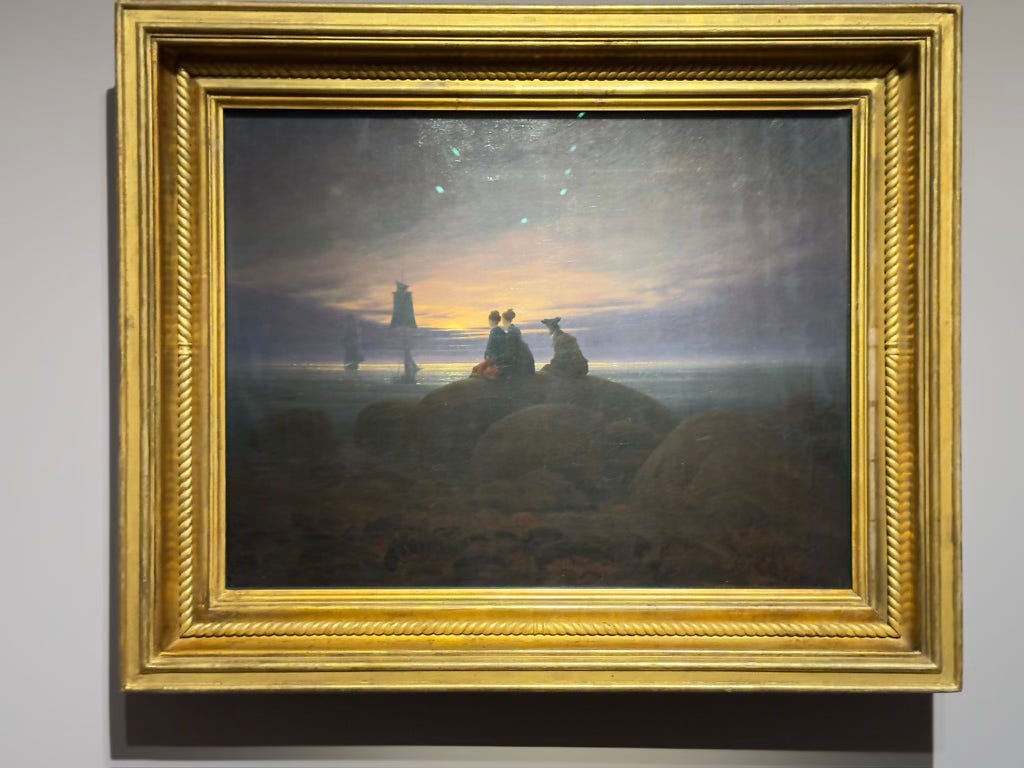
I spent four days last week in New York City, taking as many bites out of the Big Apple as possible. Unfortunately, there never seems to be enough time to take advantage of all the city has to offer.
But, on this trip I was able to log three museum visits. One of them was to the Metropolitan Museum of Art, affectionately known as The Met, where there was an exhibition of the art of Caspar David Friedrich (1774-1840) titled "The Soul of Nature". His art holds major lessons for all photographers.
First, a bias. I'm a firm believer that exposing ourselves to the work of classic painters immeasurably benefits our photography. I have written about this before and I urge my students and clients to spend some time studying the paintings of the greats, like the Dutch Masters if you want to gain insights into lighting and composition.
Art for Photographers
I'll start with Friedrich's fascination with light. Many of his paintings illustrate the power of lighting in an image (you'll have to excuse these images shot with my iPhone with unavoidable spotlight reflections).
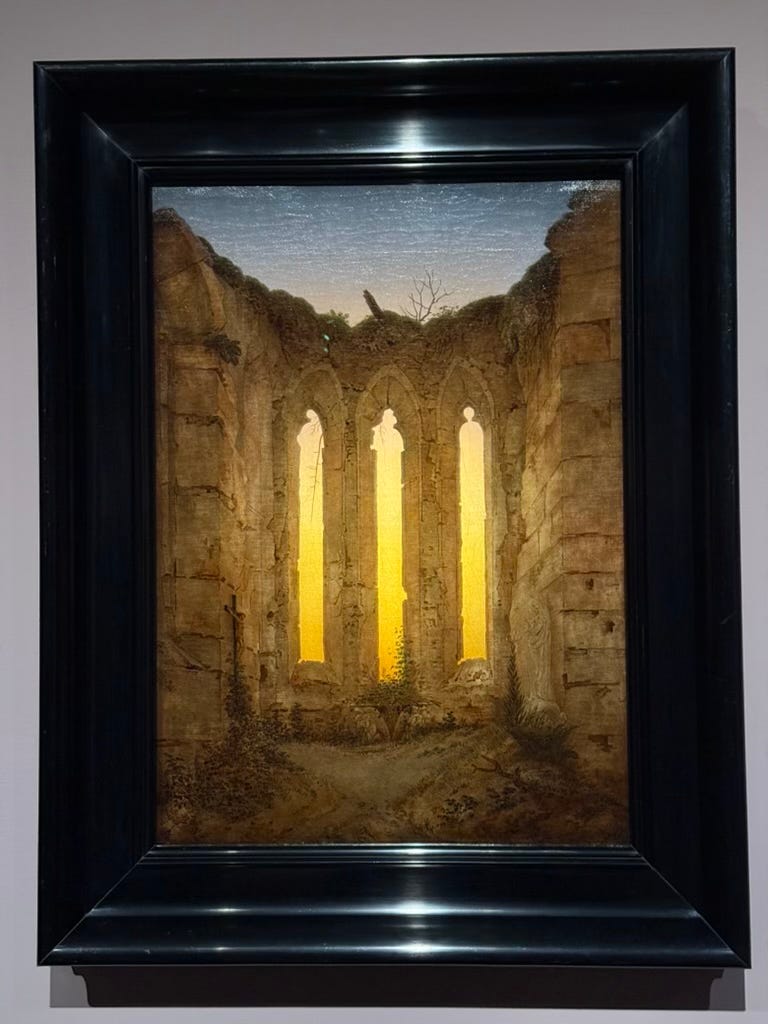
Titled "Ruins at Oybin", note the play of sunset lighting the walls and its gradation into the shadows in the foreground. We could accomplish a similar image with our cameras, but it might take two shots to accomplish that; one for the light and one for the shadows.
The painting that held me spellbound was "Monk by the Sea", one of Friedrich's most praised works of art.
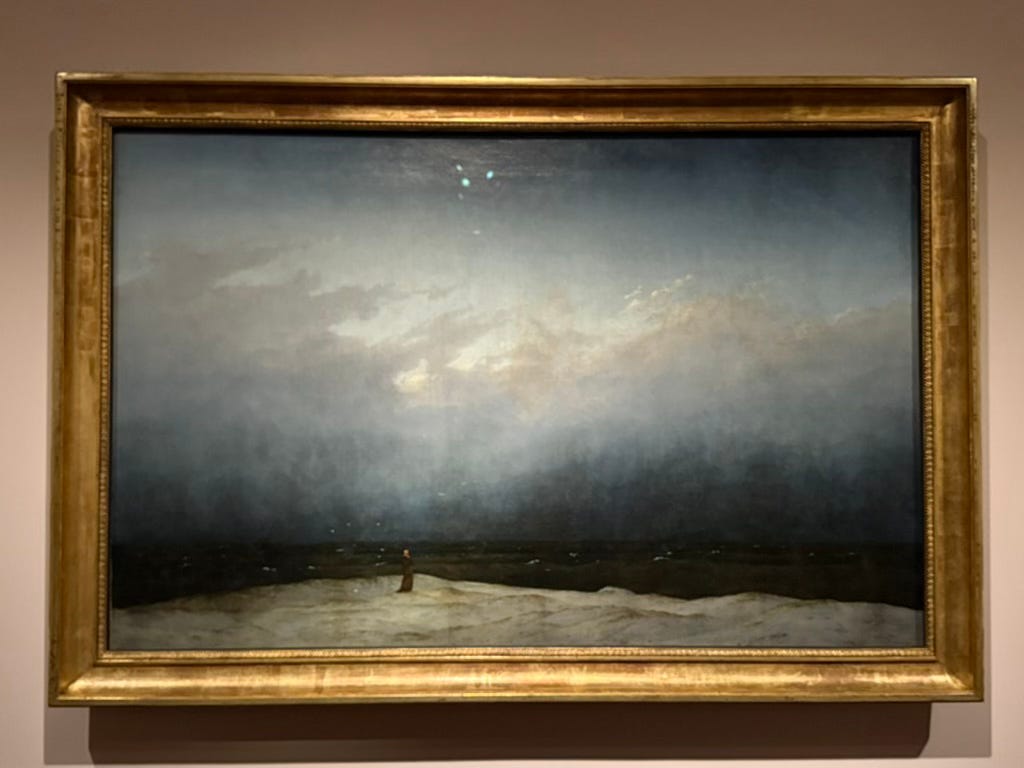
To me, the magic lies in its minimalistic approach. To his credit, Friedrich removed three ships that were in the scene, lasers revealing that he painted over them in the final rendition. Look carefully at the composition. The monk is not centered. The skies are ominous, adding dramatic tension. The foreground catches the last rays of sunshine.
The viewer can't help but wonder what the monk is doing there. What is he thinking? Does the approaching storm reflect his vision of a dark future? Or does his stance on solid earth give us hope?
As photographers most of us tend to use the strengths of the medium to extract as much detail as possible from a scene. But the camera is a double-edged sword. It's very strengths can be a weakness, masking the power of a minimalist approach. Too much detail can leave a viewer initially impressed, but bring minimalism to a scene and you force the reader to linger, to question, to interpret it for themselves.
I fell in love with this painting, titled "The Riesenbirge". It is so unlike the art of his day in its simplicity.
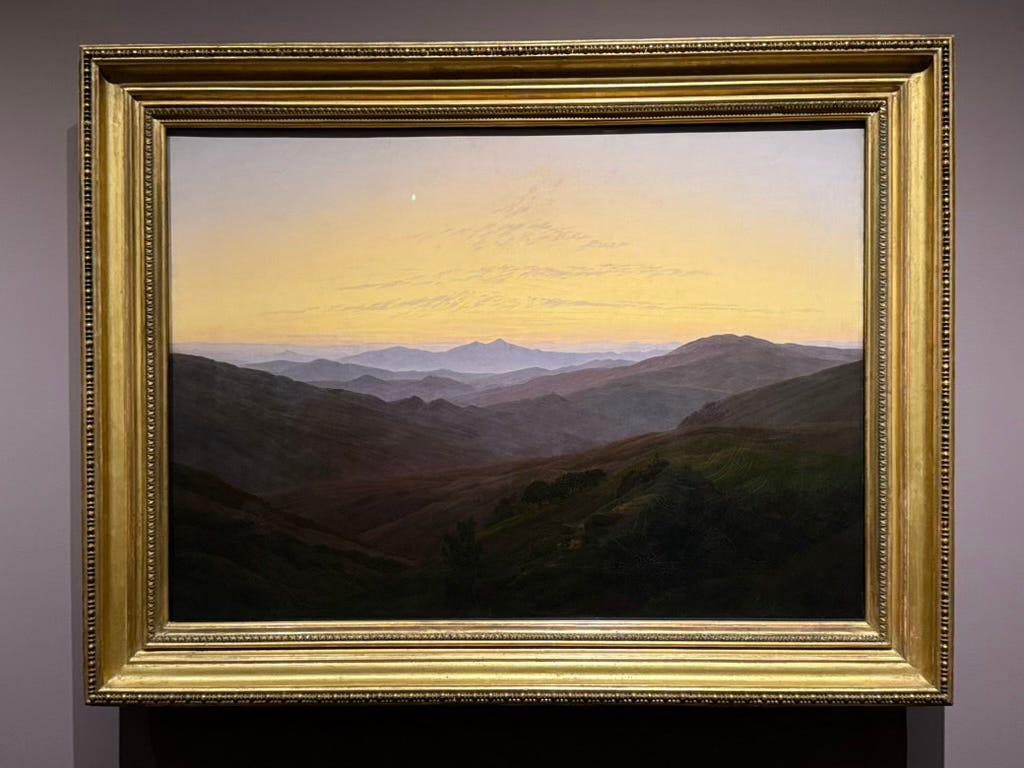
It conveys a quiet mood, yet allows us to marvel at the patterns and tonality in the mountains. I smiled because it reminded me of a scene I captured in China a few years back on an overcast day. For me the focus of the scene was on the tonality, layering and patterning of the mountains.
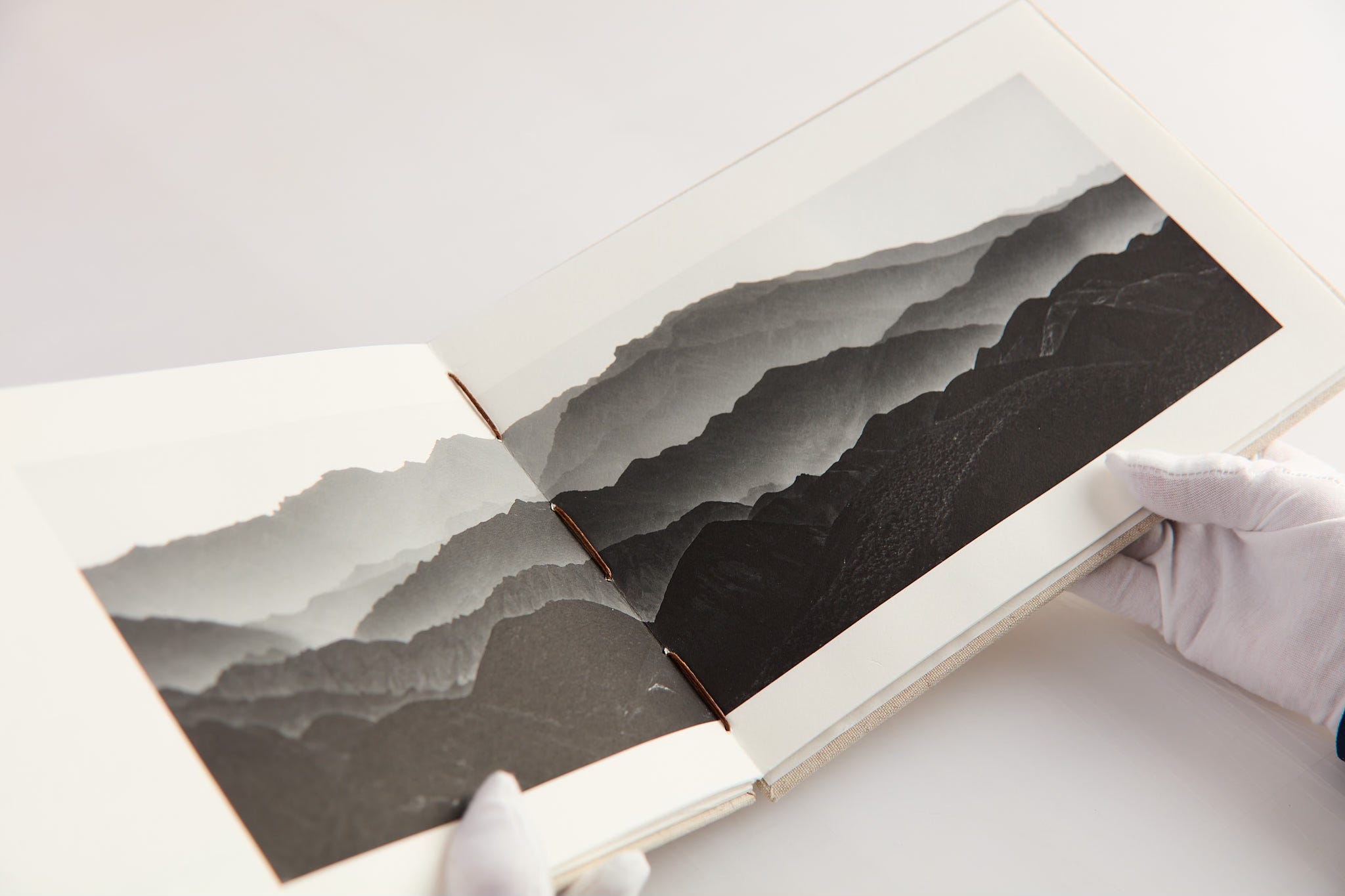
After spending the better part of two hours immersed in Friedrich's work, I know that I'll be looking for more ways to express even more minimalism in my own.
And one final comment. Visiting museums for other than photographic exhibitions has wider ramifications for our art. A recent study by scientists at the University of Cambridge found that stopping to ponder artwork enhances our ability to think more abstractly.
We stop and absorb the scene in front of us, sometimes immediately translating that to our photography. But at other times the painting comfortably nestles in our brain, simmering, while we unconsciously abstract the concept. Then, when presented with a similar scene, camera and tripod over our shoulder, we pause and vision the final print in an entirely new way.
Solve puzzles like crosswords, Sudoku, or optical illusions to train your brain to see multiple perspectives. Additionally, brain teasers and 3D models, particularly in arts and crafts, are effective as well, with research supporting their role in enhancing abstract reasoning.
Get a 3D printer and start making Models ......
Painters sit at the pinnacle of the visual creative mountain. Photographers sit somewhere around the base of the foothill.