

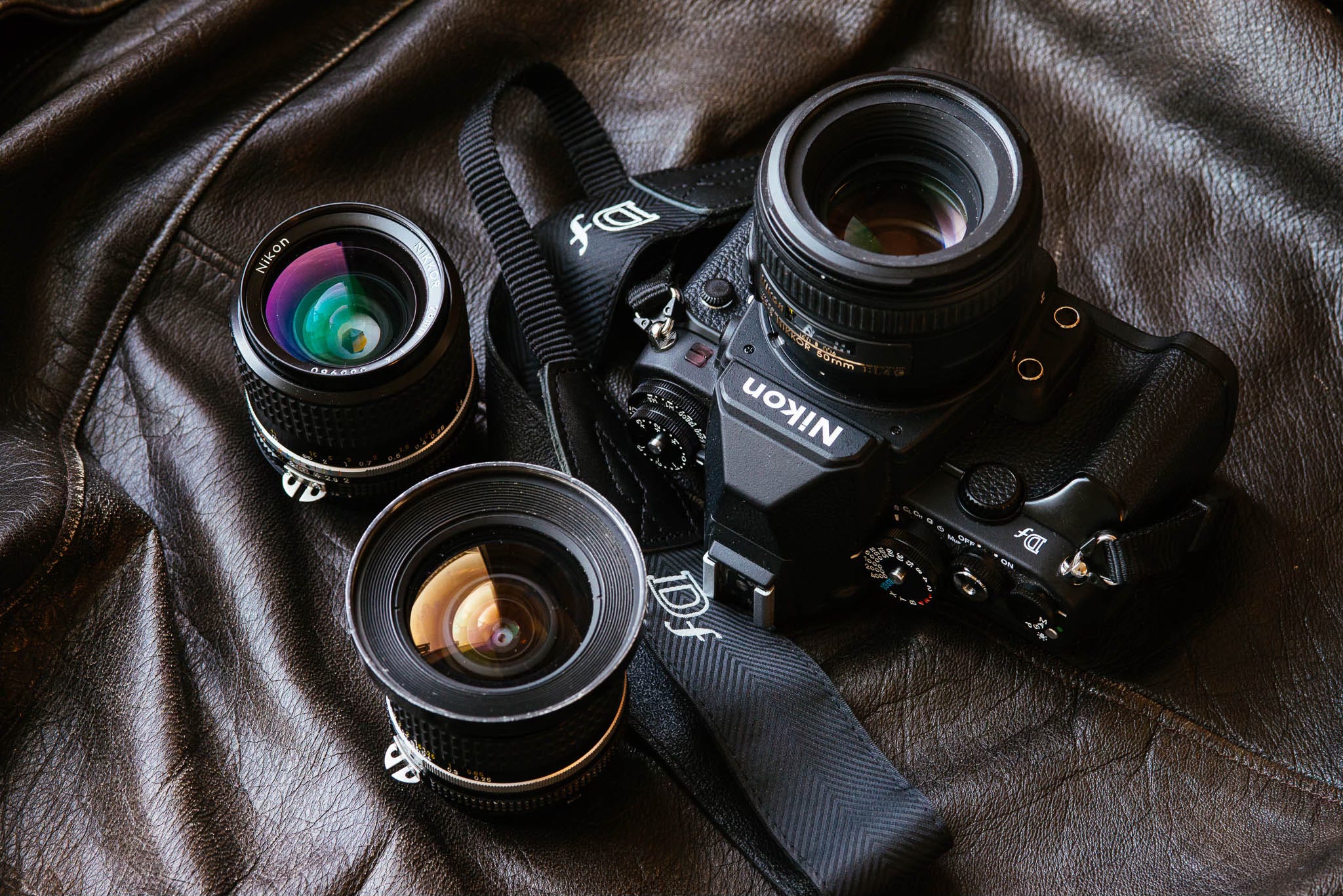
You may remember, or heard a legend of those before times, the dark ages, before any such thing as auto-focus. I can confirm, first hand, those days were real. I was there. I decided to go all-in with the release of the Nikon D-8008 around the time of the birth of my first child. I read the brochures, the advertisements, I believed what everyone was saying; the photographic “challenges” would be no more. Slapping down my hard-earned cash I was now part of the in-crowd. You see, I thought it would help me make better pictures of my daughter when she started running around. Auto-focus would make it easy. My pictures would be great. Guess what happened next…
Well, I used it, and used it, and my pictures were no “better”. The fact was my pictures were worse in many ways. I went back to using my old F2 camera or Leica M4. Was my focus worse? Probably not but my pictures were. I had frustrations, I tried many things but when push came to shove I’d usually just use my M4 or my F2 depending on the lens I wanted to use. I didn’t give up, I kept believing the marketing guys and the pundits of the time in the magazines (film days). They had a similar message to what we hear now. That old camera you have is trash, the new version is WAY better, this finally solves all your photographic woes. So I did what all of us have done. I bought the new one only to discover it was a lie.
On and on I went. I believed the next lie, and the next lie, and of course the next one. The promise of autofocus sold way more cameras than anyone needed to buy in any given lifetime. Then we were ushered into the world of digital. The recipe to sell cameras went into overdrive and we’re still believing the lies. I believe them less now. The newest camera I own is over five years old but I didn’t buy it new. I paid less than half its MSRP and I only use it for video because my other cameras are crap at making video.
What I Learned
A lesson I learned over and over again is that camera “features” can be a help but can also be a huge distraction from the fundamental essence of making good photographs. Worse, those features can lead down endless roads of useless experimentation only to end up at the same place you started, all of that experience wasted on things that don’t help to refine your photographic vision or time wasted testing things rather than doing real work on real projects.
Most photographs don’t need auto-focus, seriously, they don’t.
Most photographs have nothing to do with focus speed or infinite precision.
Most photographs don’t matter much on the focus on a singular object at a precise place, deciding on plane or zone of focus is more important.
Camera speed is not a substitute for preparedness.
Camera speed and automation seem to induce antithetical behavior to preparedness, paying attention to composition, and really looking at the light.
Making deliberate choices enhances preparedness as well as finding the best photographic possibilities of most circumstances.
Faster, more automated cameras certainly may help if used with the deliberation and preparation you’d use for a slow, manual camera. Then again they only “help” when the situation calls for it. I also am a big believer in using a camera that you like everything about it. I believe that because I know it’s true. I make better pictures when using a camera I like to hold, operate, and look through the viewfinder. You may say; “That doesn't sound very professional, you should be able to make pictures using any camera”. Well I can make decent pictures with “any camera” but I also like to enjoy the experience which overall will lead to better pictures. Yes, if you hate the experience you could make some decent pictures but it’s a hard thing to scientifically compare.
A couple of months ago I harshly criticized Fuji’s new camera for adding features that attempted to make buyers concentrate more on the fundamentals and having more fun. These features make the camera to operate in a more limited way. I still think that’s silly. We do not need a new camera with more features to be fiddled with, what we all need we already have but used with more deliberate purpose rather than yet more features to explore.
Instead of paying a thousand bucks for some new distractions use some of that money to buy some paper, or a small printer (if you don’t already have one), and take that contact sheet challenge I explained quite a while ago. Make one decent picture every day, do it deliberately of whatever catches your eye. Or if you have the time “burn a roll” and make every frame count on a walk, or a mini-project, or anything. Make that “contact sheet” on real on paper. I assure you that you’ll get somewhere faster in your photographic journey than you will with a new camera, a faster camera, or fiddling with new features.
Making prints as part of the process when photographing will quickly make your pictures better no matter where you are in your journey. It reverses the modern thought process. Instead of making lots of pictures that will never see the light of day or be seen, shoot every one for a print or at least a contact sheet. I think you’ll be surprised how quickly you will be more proficient at composition, analyzing light, looking for better angles, everything as soon as they are all destined to some sort of physical output. Make it the rule instead of the exception. It is amazing how much better every frame will be when that frame costs something and ends up on a piece of paper.
Light & Beyond II Exhibition
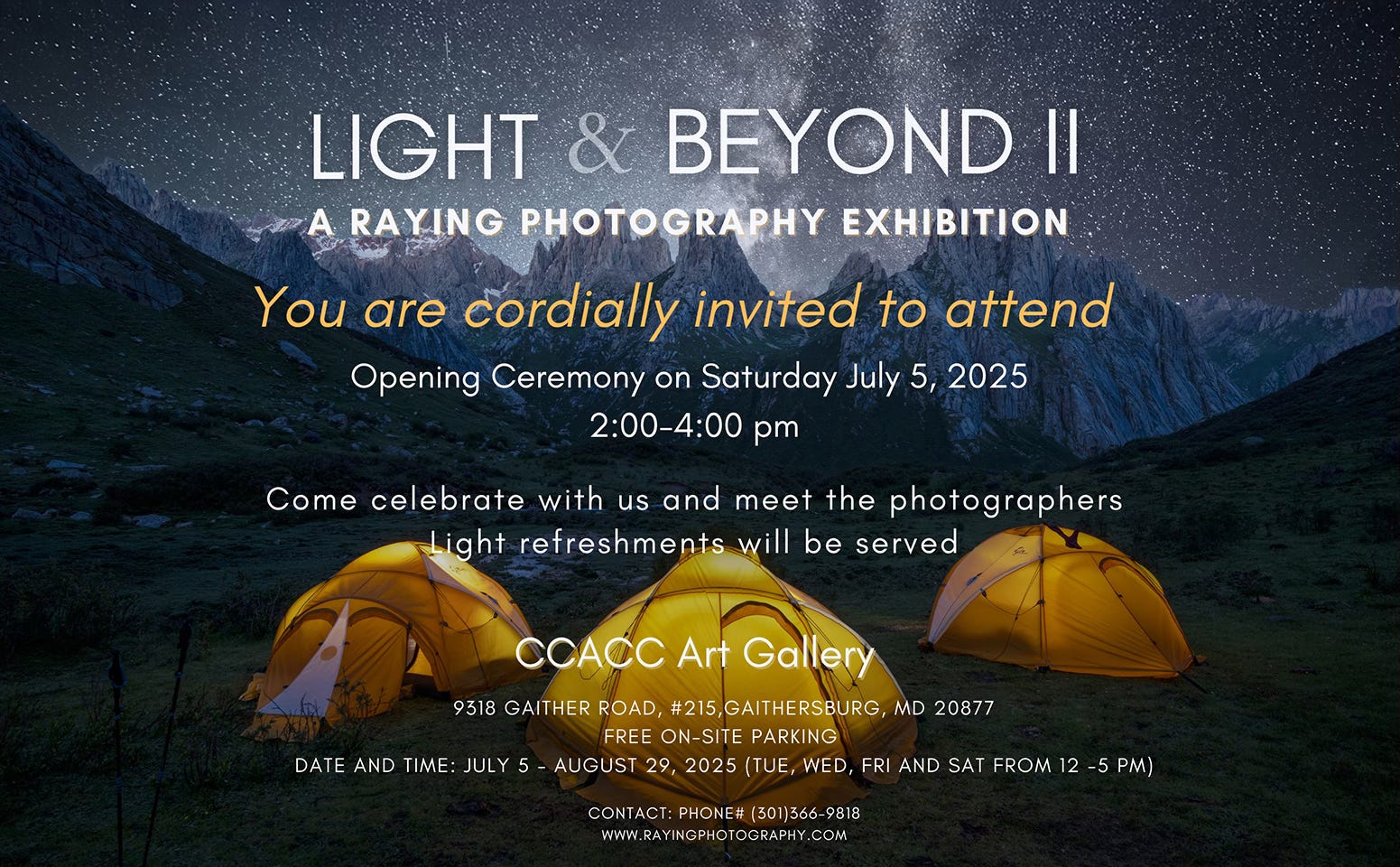
We love prints and exhibitions that members of our Paper Arts community take part in. Seeing prints in person and interacting with the photographic artist who made them is a great experience, far better than an on-line experience. If you are in the mid-Atlantic area of the U.S. , the Raying Photography group is hosting their Light & Beyond II exhibition from now until August 29th, 2025 in Gaithersburg, MD. Stop by and support these photographers while slowing down to appreciate some great photographic art.
The Raying Photography Exhibition – Light & Beyond II is now open at CCACC Art Gallery! This stunning exhibition features 10 photographers from Raying Studio, each presenting two large-format works that explore the beauty of nature, wildlife, and the human spirit through extraordinary light and vision.
As a long time photographer I have rarely used the autofocus on my DSLRs, preferring to manually focus my lenses. None of my film cameras have ever had autofocus. Early autofocus seemed like a solution in search of a problem to me since it worked best in bright light when focusing manually was easy and fell down in low light when it could have been useful. Things have improved in that regard, but old habits die hard. All of my commercial work happens in a studio with flash, so auto exposure isn't something I use either--my trusty Sekonic L 718 tells me what the exposure will be since none of my cameras will communicate with my White Lightning X series strobes. If I shot sports for a living I'm sure I would feel differently.
As for the equipment treadmill, my newest digital camera came out in 2016. It makes great images and I see no reason to upgrade. I learned long ago that equipment has to be good enough and feel right in the hands, and that newer isn't always better. The newest film camera that I regularly use is a Nikon SP that came out in 1957. Film is basically a hobby at this point, and I enjoy using the older rangefinder cameras and lenses that I have collected over the last 12 years.
While I agree with your perspective on unnecessary bells and whistles, I disagree with your dismissal of autofocus as unnecessary. Having your subject or point of interest in sharp focus is essential to making a meaningful photo, and I'm glad my camera *usually* takes care of this aspect with no problem and allows me to "focus" on other elements such as light, composition, and mood. I bought one of Minolta's early autofocus film cameras back in the 90s and it instantly improved the quality of my photos, especially when I started enlarging and selling them.