

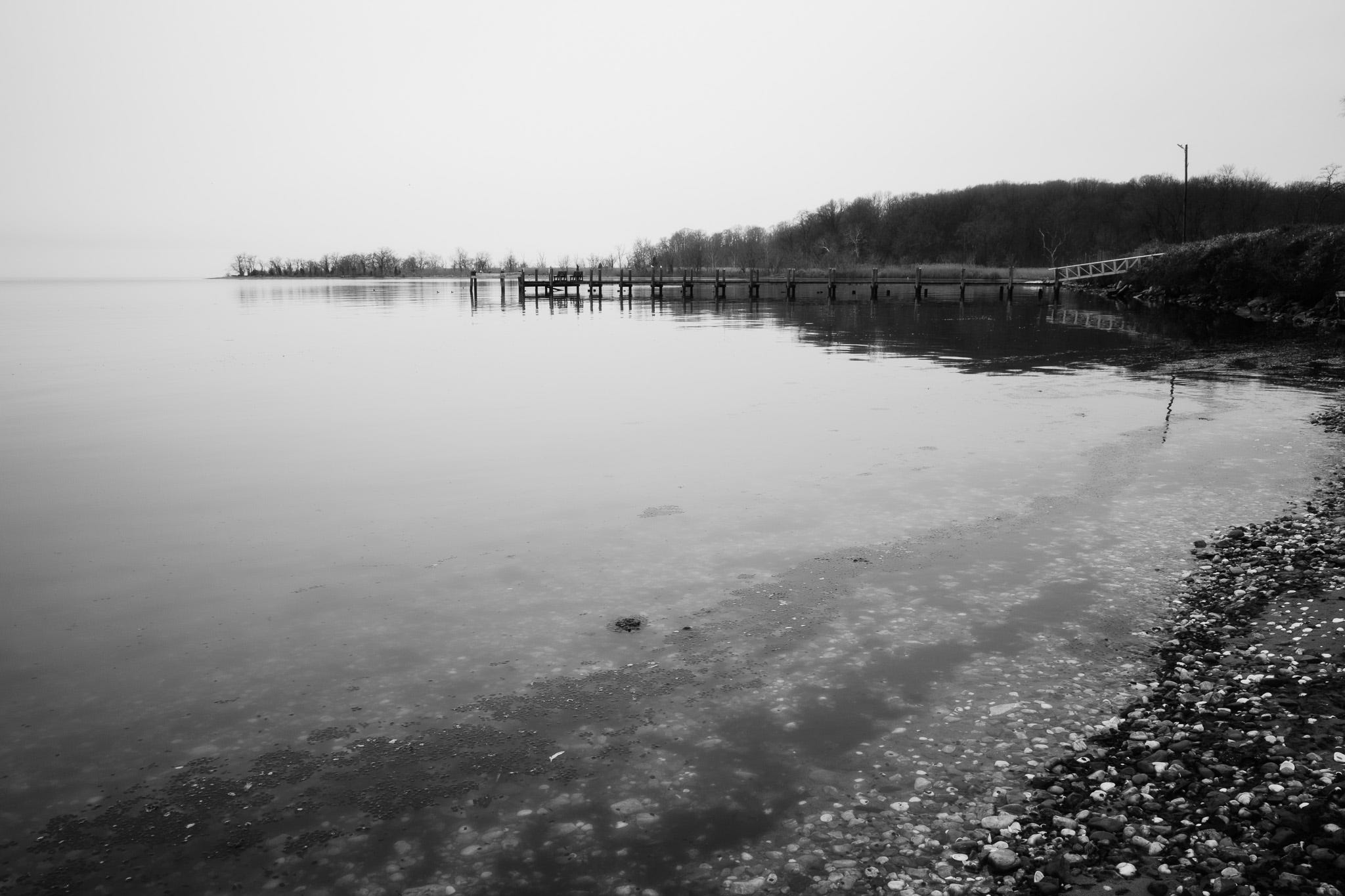
Today I wanted to share an experience with all of you that strikes terror into the hearts of many of us: curation and the final selection of any given number of photographs we choose to publish and put out there in the real world. It’s not so bad when we push them out on the infinite stream of the interwebs where they’ll immediately be blended into the stream of content barely registering to anyone. The terror comes when you’re choosing a very limited number of prints to put your name on without any recourse of “no, no, I’ve got more, I’ll show you, I have dozens of versions that you might like better…”
The three pictures I’m discussing today are the narrowed-down choices of which I needed to pick only one. Of course, they are not exactly the same but are minor variations of the same scene. The one that I need to choose will be included in a triptych, a group of three pictures meant to go together. The other two scenes are already set. I “like” all of these and have a bias towards one. Let’s call that the photograph I wanted to like the best. That desire was probably from an “intellectual bias” of thinking too much about which one was “best” rather than any sort of visceral or emotional evaluation.
Context & intent
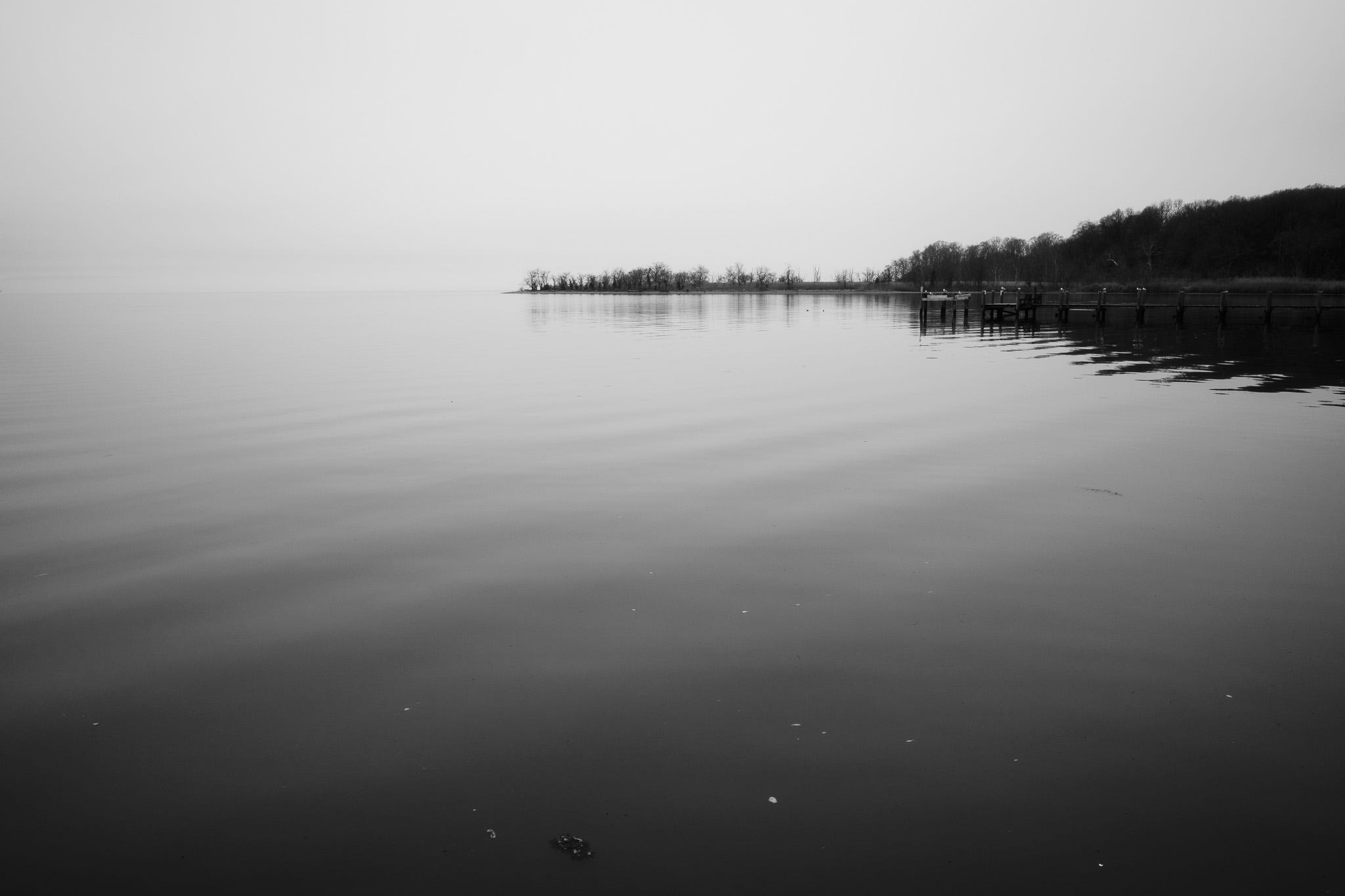
That triptych I spoke of, it’s a gift, a 90th birthday gift for a woman that’s lived in our neighborhood for decades. She’s lived one street away, on a hill overlooking what might be considered the center of life in the community; our little harbor. I decided to make three black and white prints on 11x14 paper, framed that were small enough to be displayed anywhere she might want to, that could be displayed together or individually.
Either way, I wanted the harbor to be immediately identifiable in each of the three pictures but to be more abstract rather than documentary. I wanted those three prints to be representative overall rather than specific to a time or season. I wanted them to feel peaceful rather than turbulent; it literally is a harborand that’s the feel I wanted to portray.
I printed proofs of all three and lived with them for a few days, but that didn’t help. I still couldn’t land on one. The photograph I wanted to like the best was still asserting itself, but so was the nagging feeling that something wasn’t quite right. What to do, what to do? Why were the other two so easy when I set the parameters to three, a triptych?
Getting outside help
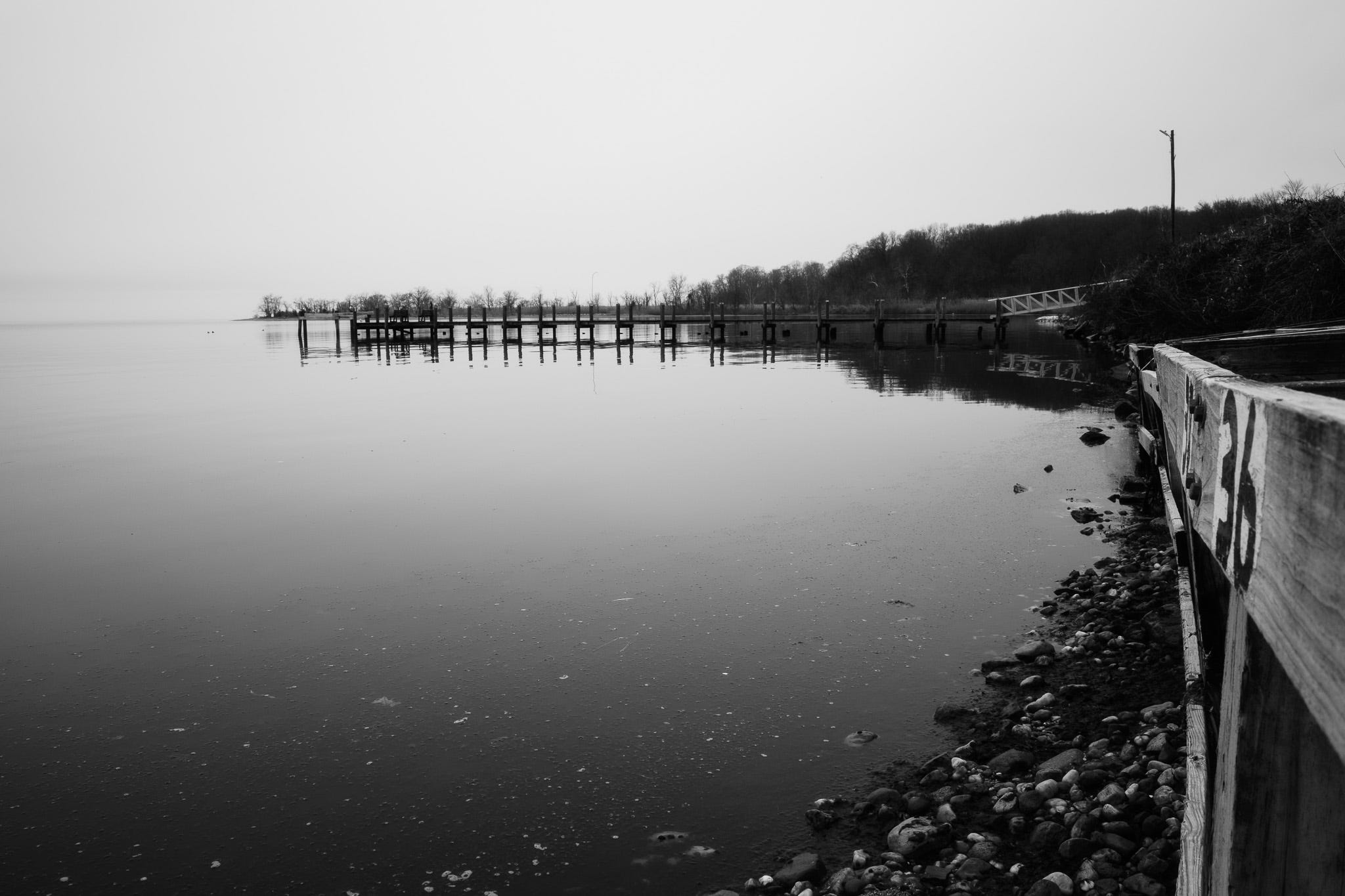
I was looking at the three choices long enough. None of them are super-fresh. I made all of them more than three months ago. I curated a collection of 10 as a mini project/portfolio a month or so after I had flagged the ones I liked and culled the ones that were too similar. In fact, I went to the “secondary” wider range of choices for these three. Yes, this last one I had already culled from the larger group.
At this point, I could flip a coin. Any of them would do, right? The other choice was to get some input. There are a lot of ways to get feedback. How you choose to do it is extremely important. All of you now have almost all the information on the context and, importantly, the intent of the collection of three image triptych I was targeting. What you don’t have is the other two selections I made. Maybe I’ll discuss those another day.
When seeking outside input, here are the things you need to bring to the table:
The context, the project in terms of size, scope, venue, and audience. In this case, a total of three images that are intended to be shown together but also stand on their own. The audience is primarily one person but also others that may be invited into the recipient’s home. Most of whom will be familiar with the location, have seen, and can see right now our harbor.
The intent of the collection of images, what you want to show, and how you want to show it. How you want them to feel. In this case, I want them to be abstract, minimalistic but recognizable in terms of exact place. I want to portray a hyper-specific harbor but also convey the spiritual sense of harbor.
This one is crazy important... know who you are asking feedback of and the kind of information from them that you are looking for. It’s very different asking a forum full of “photographers” focused on technical stuff, a painter you know, a writer, someone across the world geographically and culturally, and someone across the street. You may not discuss everything I just shared with you but rather specific things to get the specific feedback you need.
What did I do? Well, I took the short, most direct, simplest route possible. I asked another person in the neighborhood. Another water person who’s spent decades seeing and looking at our harbor. I didn’t talk about all of the context in terms of how many pictures, I didn’t talk about my artistic intent, I didn’t do anything but casually show him the three pictures you see here and asked, “which one do you like best?”. That’s it.
I’ve been looking at them for months as a whole body of work. I’ve been living with the three shown here for days or weeks. The man I solicited input from answered within 10 seconds with all confidence the one he liked best. The photograph at the top of this post was his answer and the one I went with. Of course, I asked him why. In a nutshell, his answer was composition. He didn’t use that word, but that’s what he meant.
More specifically, he didn’t like “all the stuff” on the right edge of the last one shown. The one I “wanted to like best” he couldn’t really like, but now I know what was nagging me, it’s too abstract, there’s not enough context in the composition, it could be anywhere, but more importantly, it does not look like “a harbor, our harbor”. Composition isn’t just placement of something in the frame, it is far more than that.
Which one would you pick? Well, that might need the rest of the context; the other two. I’ll save that for another day. I can tell you this particular selection has given me a lot to think about if/when I show this collection as a larger body of work. I don’t share a lot of my personal work here, but I hope sharing some of the interworking of editorial thought process helps some of you with your own terrifying decisions and culling your work.
Always, always, remember that there are many modes, audiences, and venues for any given body of work of yours. Selections you make today can and will change based on venue, audience, intent, and number of prints on another occasion.
Wait wait. I have others you might like better! Hahaha! So true. Your portfolio workshop taught me so much about putting together a grouping.
If I had to choose, and given you are talking about an 11x14, I would want to see a print of each option paired with the right paper. A Matte Baryta for the minimalist one, a metallic fine art for the first. The mood would be entirely different, and so the final choice should come down to what you want to tell your friend.