

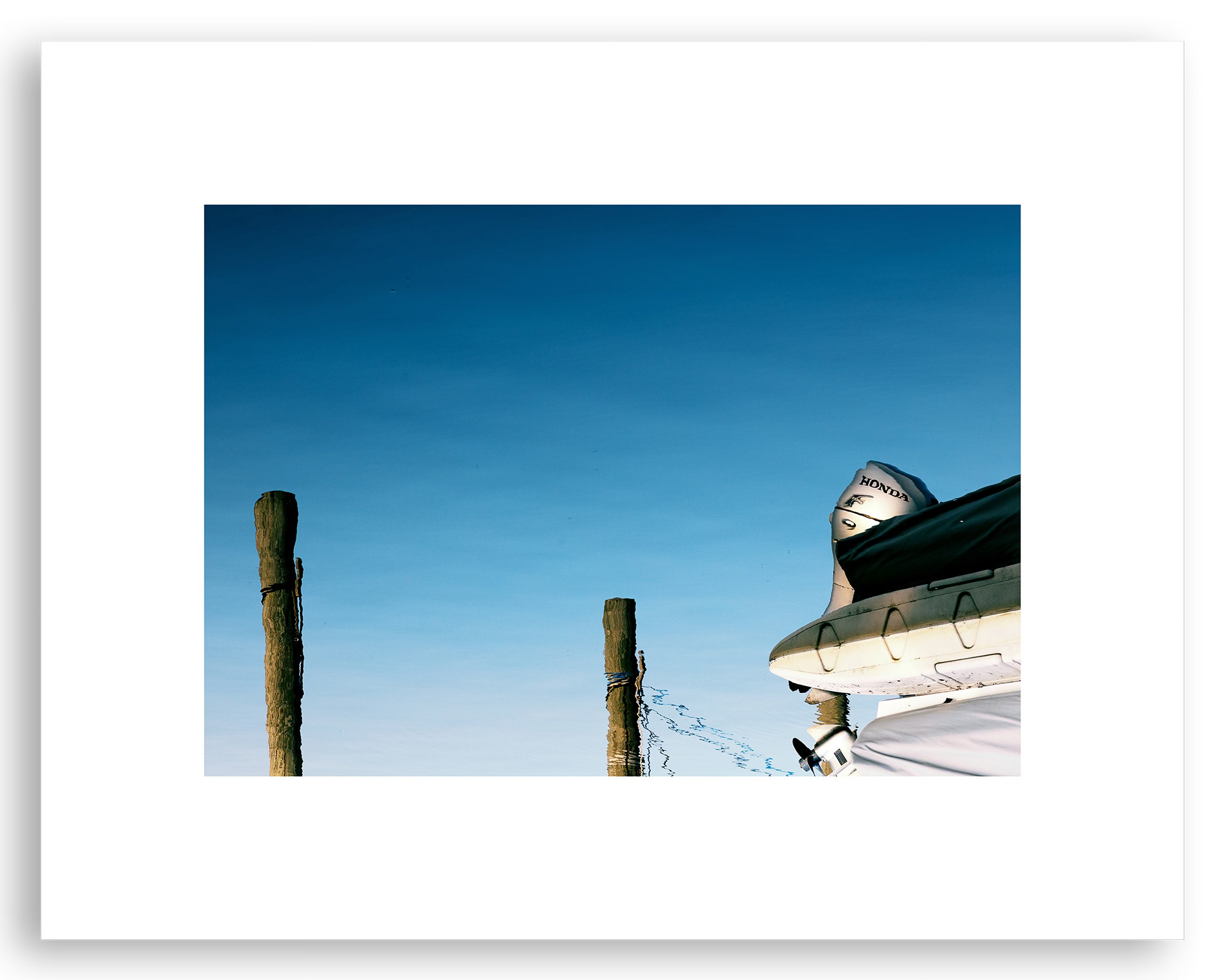
I like to think of myself as open-minded, curious, and willing to engage things on their own terms. Turns out that we are all probably guilty of cognitive bias. You might remember a review that we shared of the relatively new baryta matte papers more than a year ago. There are a lot of things to like about those papers. One primary characteristic would be their relative brightness compared to natural matte papers. That brightness gives prints more visual “pop”. For some photographs this extra pop can be exactly the thing that makes it sing.
For decades that baryta coating was the go-to way of providing that little bit of extra visual contrast without resorting to optical brightening agents. The catch was that it has traditionally only available coupled with a glossy surface. Having that option now available on a matte paper is fantastic option for those that don’t want a few of the downsides of matte papers using optical brightening agents. Personally I avoid papers with OBAs due to their tendency to appear blue in certain lighting conditions. This is especially true when using strobes with very high color temperatures when making pictures of prints.
There are a ton of situations where choosing a “bright” matte paper with OBAs is the best choice and truly enhances certain work. One of the downsides of the matte baryta papers is the china-like smoothness. There’s no choice of surface textures, the two characteristics are married together.
Cutting to the chase, I was shocked that a paper I’ve seen a hundred times in sample books had absolutely zero optical brightening agents. When flipping through small and large sample books I’ve always assumed that the paper did given how “bright” it appeared contrasted to “natural” matte papers. On a whim I printed one of my Watercolors/Subversion project photos on Canson Arches 88. It looked great. It looked a lot like Moab Entrada Bright but with a surface akin a matte baryta paper.
Upon further investigation I found none of the Arches line of four different papers contained OBAs. This revelation caused me to immediately put a fully comparison of these Canson Arches line of papers on the schedule. We’ve obtained a box of each of those four different papers this week. I cannot wait to share our findings with you.
The reason I am so excited is that matte papers offer a huge variety of surface textures and hand feel. Matching photographic work to the perfect paper is truly an art unto itself. Exploring where the Canson Arches line fits into this broad spectrum of matte papers between natural and bright opens a dimension new to me. I’m hoping this exploration will save some of you time and money while pointing you in the right direction for your photographic projects.
I’m sure more than one subscriber has experience with the Arches line of papers and the above mentioned Arches 88. I’d love if you shared your thoughts on using them with us and the rest of the community. We’ll be sharing ours shortly but not this week as we’re neck deep with a group of talented photographers hosting a portfolio workshop.
I haven't tried any of the Moab papers as of yet. Or the new to me Canson paper but, After trying a couple Canson sample packs I'm pretty confident I could try some of these papers you are trying & be happy with using Canson papers alone. Looking forwards reading your review. Thanks for threads up.
20+ years ago, when I started printing, I bought every recognized paper I could find (yes: spending a lot of $$$) and ran my own tests. In the years since, it has become a habit to test new papers. I found the Canson brands to be more to my liking than any other. (I was initially hooked by Arches Velin Museum Rag.) I found the Canson products to be diverse, and pretty much capable to taking both color and Piezography inks. I like the way they deal with tonal values and allow a long reach into the shadows and black, if your printing technique supports that. I like their papers so much that I applied for (and received) a Fine Art Printer certification from them. There are other papers I use, but for final client prints, I almost always choose Canson.
The Arches 88 is indeed a very white OBA-free paper and a common go-to when I don't want texture, or the whiteness is called for by the image.
I have no horse in the race, as I get no benefits from being Canson Certified, other than the accolade. I pay full price for the papers I use, but it always makes me feel good to share my delight in quality papers.
If your experience with Canson products matches mine, you are in for a treat.