

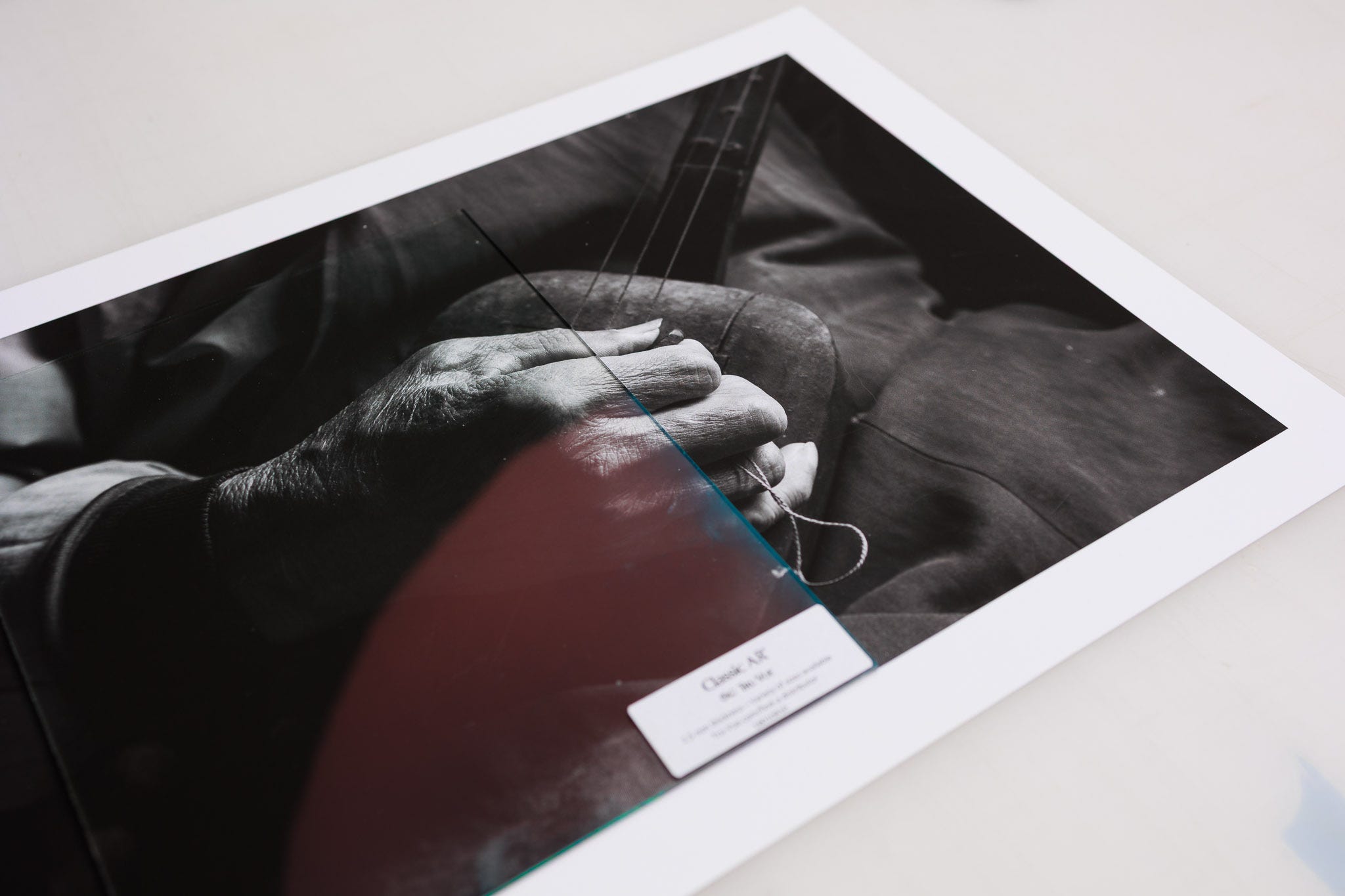
Often getting short shrift in discussions on matting and framing is the issue of glazing. For those of us who create our own frames or purchase them for our prints, selecting the glass is often an afterthought, frequently relegated to a big box store visit. In this series of DIYs, we’re going to address the issue of glazing in detail and most of all we’ll try to answer the question; Is specialized glass worth the cost?
Why Glaze?
For hundreds of years fine art - think of the great masters in oil and watercolor - never placed their work behind glass. Go to any major museum and you’ll enjoy the privilege of seeing the art just as the artist intended, with no glazing that might detract from the work itself.
With the advent of photography glazing became a staple. As a child I remember going to photo exhibitions with my father where virtually every print was behind glass. That is still largely true today.
The reasons for this are obvious. Prints need protection from dust, fingerprints, moisture and UV light. The simple glass available in previous generations gave basic protection, but today’s glazing offers a wider variety of protection and other benefits. So let’s take a deep dive into today’s glazing options for photographers, what features may matter most for you, and how the glazing itself can alter the look of your printed image.
Throughout the following DIYs we used Tru Vue glazing products as the standard for our assessment. Tru Vue is a high-end glazing manufacturer used by museums, galleries, private collectors and many photographers. Other than as buyers of their products, we have no business relationship with Tru Vue.
We’ve discussed a lot about mounting and framing over the past couple of years which you can find in our DIY section of the news letter archive.
Glass or Acrylic?
There are two major categories of glazing today; glass and acrylic. Within each category there are lots of choices geared to the specific needs of the artist. Each has pluses and minuses. In this DIY we’ll look at glass products. In our next DIY we’ll cover acrylic products.