

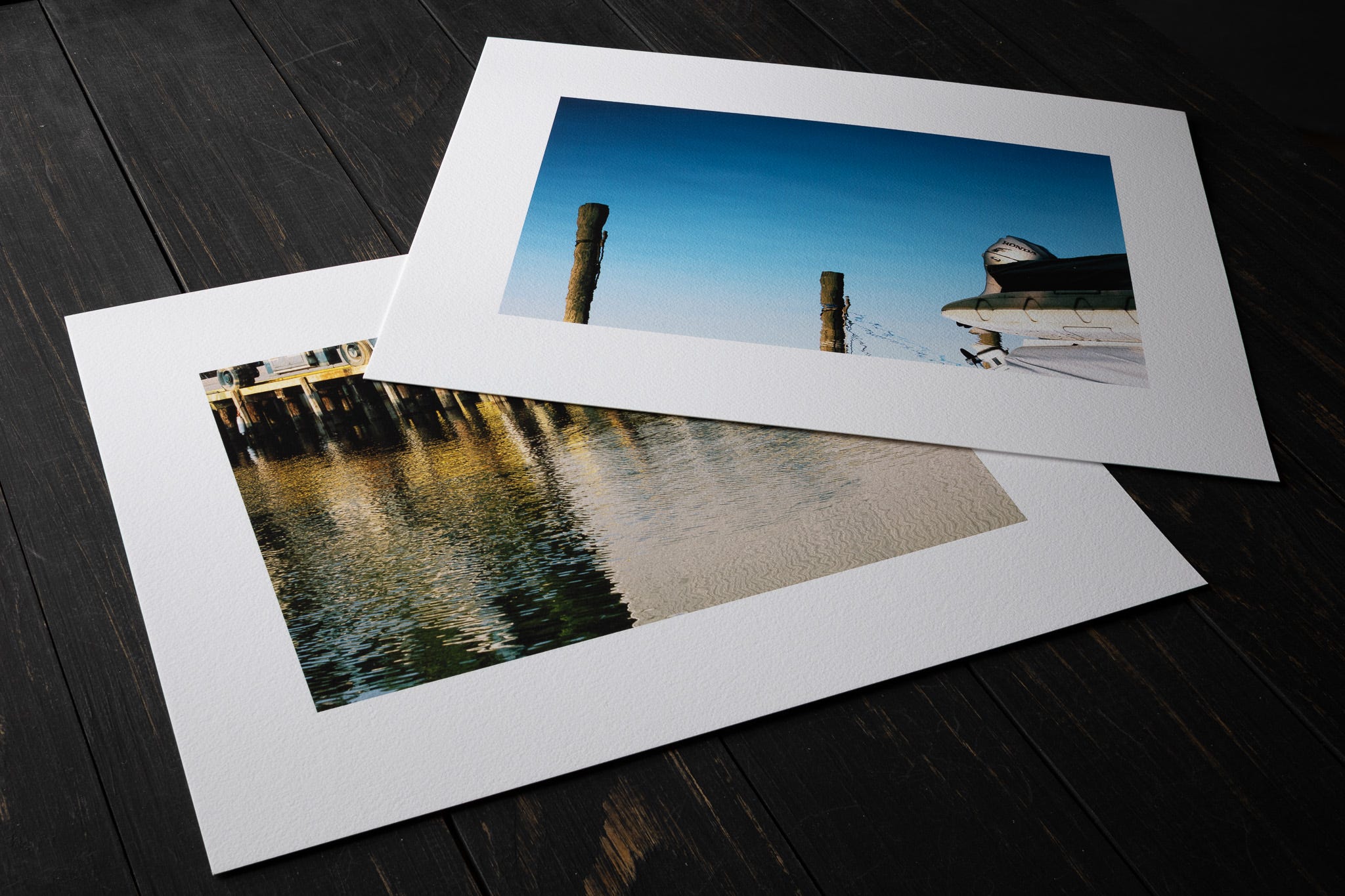
As mentioned a week ago, we’ve obtained a box of all four Arches papers from Canson. I couldn’t wait to try them for a current project of mine. I’m in the midst of deciding what paper pairs best with this small project. I’ve mentioned the project before. My working title is ”Watercolors : Subversion”. I don’t intend for this to be published as a book or small ‘zine; it’s too small. Instead I’ll be producing 10 to 12 small prints. Obviously, the project was sparked and the first two or three photographs were pulled from my original Watercolors project.
I don’t know if I am done making photographs for the project but given the work I’ve already done I already have started down the road of choosing a paper. I don’t use heavily textured papers much for my own work but decided to see what the 10 photographs I’ve made looked like on a “Watercolor” paper. Since I already have that set of 10 printed on Hahnemühle Museum Etching, I thought a good place to start with the Arches line was Aquarelle, the most visibly textured.
Before I give a summary of my findings I’ll divide this into two schools of thought. The first is my objective observations about the Arches Aquarelle as compared to other similar papers. The second being my subjective thoughts on how well I think it pairs with this specific project printed at the target size of 7in x 10.5in on 11 x 14 paper. I’ll try to make each school of thought clear.
Watercolors : Subversion project characteristics
Each photograph is color and has a very limited color palette. Every one has some degree of warm tones and cool tones but the proportion of each varies tremendously. Some of the photos are subtle, almost monochrome and also having low saturation others are vividly saturated. Taken as a whole there is a consistently in the hues among all of them. The other common characteristic is that the photographs themselves have a shininess or sheen to them for lack of better terms.
Given the nature of the project I decided to use two photos to evaluate all of the Arches line, including the Aquarelle. Both are highly saturated and have a broad tonal range from deep shadow to brilliant highlights. One is predominantly warmer tones, the other is predominantly cool tones. I thought that these two extremes would best demonstrate the papers. I’ll use the same for all of the Arches papers and the papers I am going to compare them to.
Warmer tones
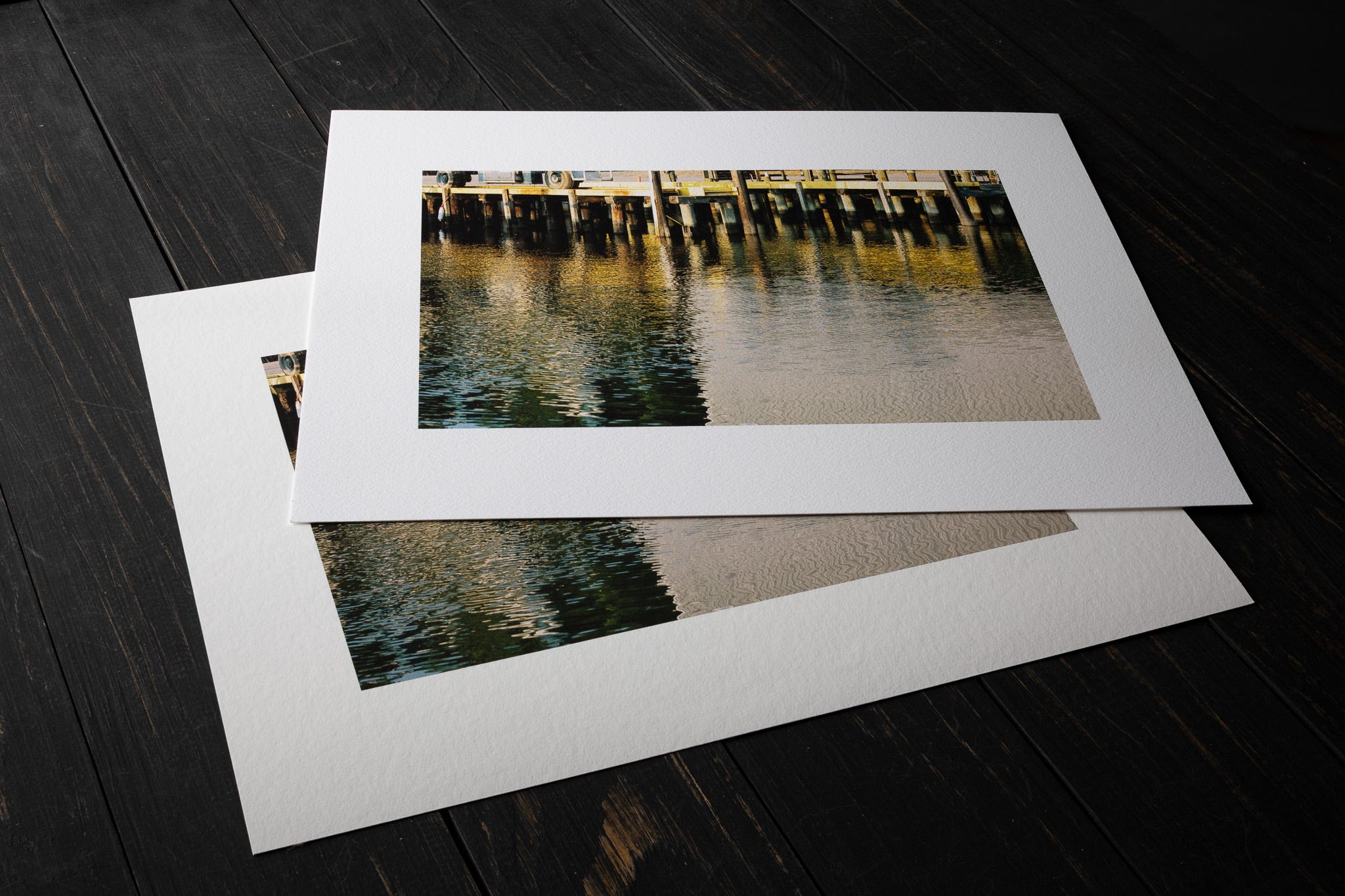
First up is the warmer tones. I’m not going to verbally exaggerate the differences between these two wonderful, premium quality papers as that would be misleading. My over all assessment is that they are extremely comparable. I’d probably choose one or the other based far more on the surface texture more than I would any clear advantage in shadow or highlight rendering. The same goes for blacks and overall gamut differences. These papers would give a similar impression if not right next to each other and being scrutinized.
The characteristics I observe are:
The surface texture as mentioned (more on that later)
The base color of the Aquarelle is slightly whiter than the Museum Etching
The shadow and highlight rendering are similar the Aquarelle has slightly higher punch in the highlights that I’d attribute to the whiter base
Much to my surprise, there seems to be a difference in the gamut within the warmer tones, specifically in the upper midtowns and highlights. The Aquarelle seems to hold onto the saturation. Take a look at the bottom left of each print in the yellows reflected in the water. The punchier cool upper mid-tones I attribute more to the base whiteness more than saturation
Cooler tones
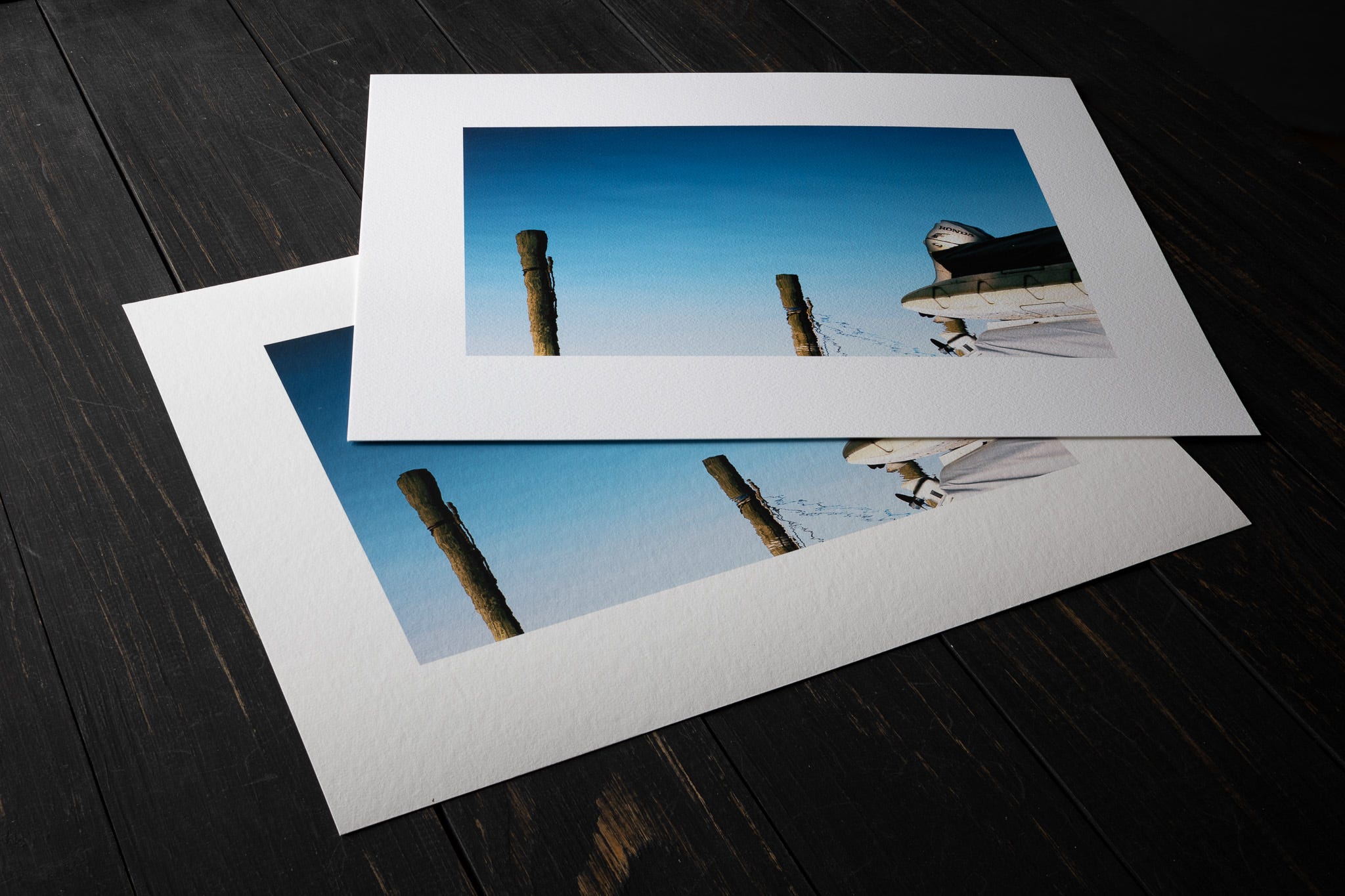
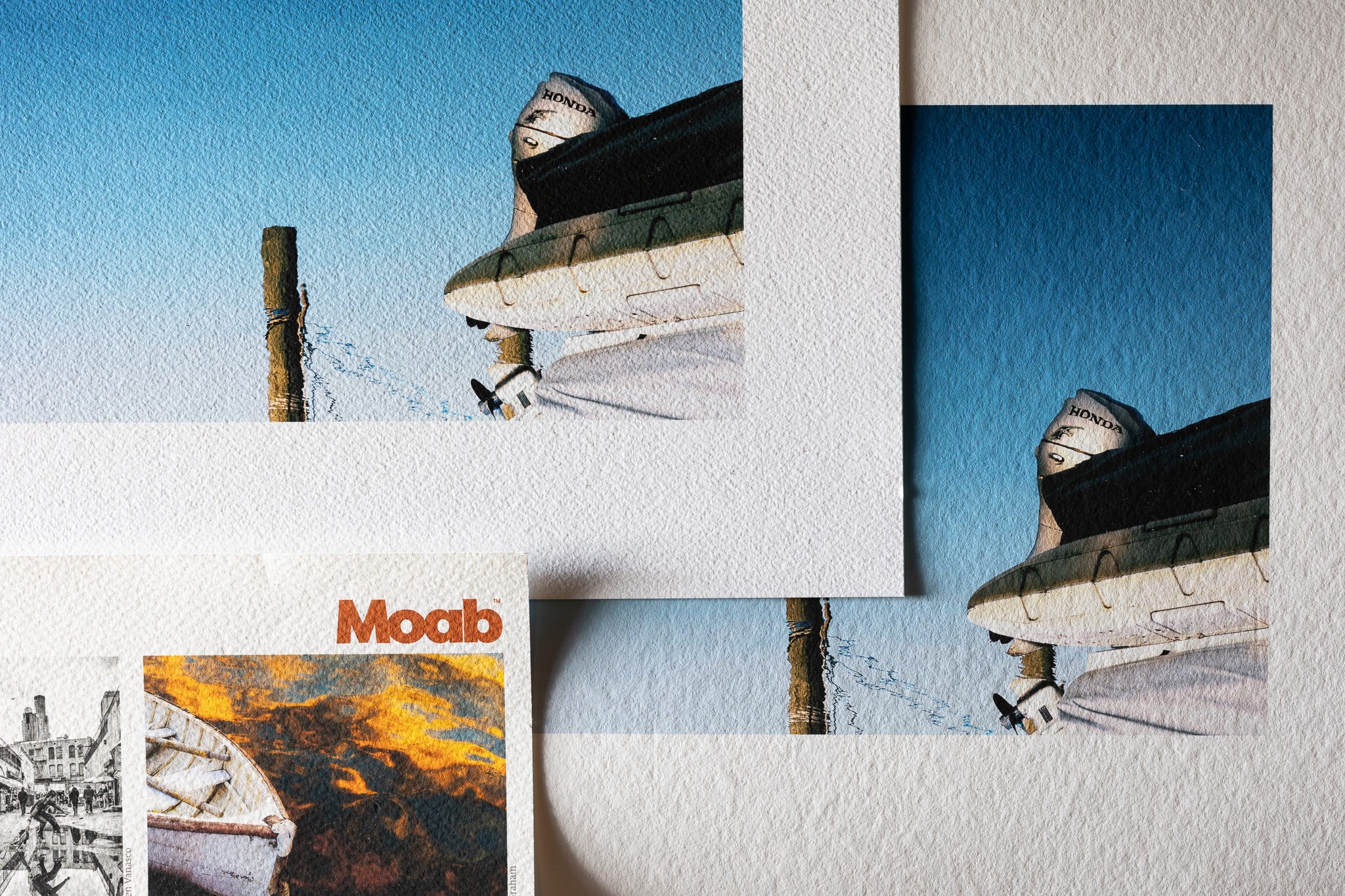
I don’t see a noticeable difference in the cooler blue tones as I did in the warmer toned photo. The rendering in terms of saturation is too similar to bother with differentiating them. If you think you see a difference in the illustrations it’s probably due to seeing more of the blues in the top print than the bottom. My observations are looking directly at the prints in a broad spectrum, even light.
The interesting thing you can see in the illustration is that my observations from the warmer toned photograph seem to hold true here. Take a look at the piling in the foreground. Again the warmer tones seem to be more saturated as the go towards the upper mid-tones. Also, take a look at the highlights on the boat and the motor.
Texture
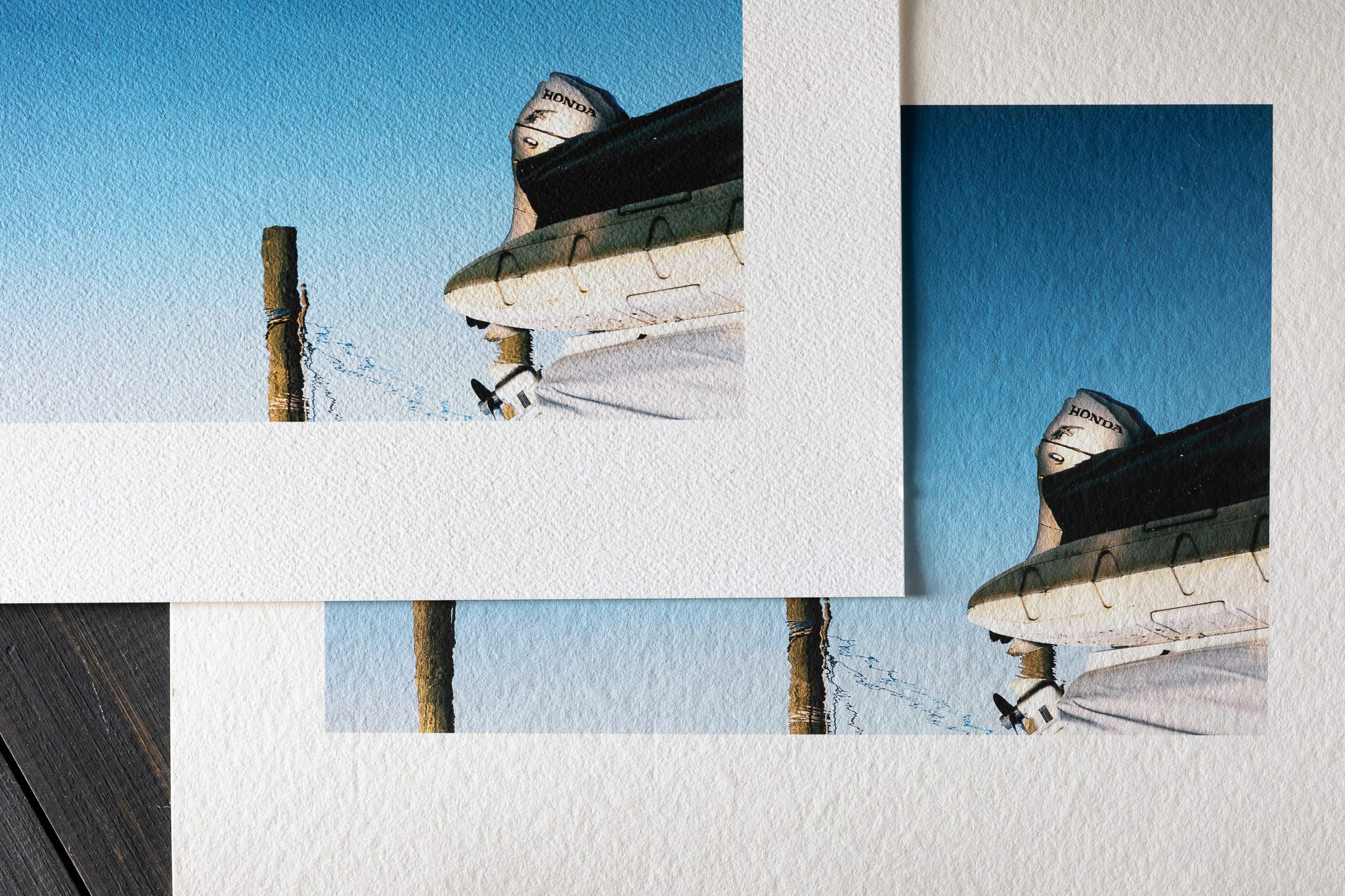
The reason I’d choose one of these papers over the other is texture. Using words to describe texture is fraught with dangers. I’ll give it a try. Both the Aquarelle and Museum Etching should be considered highly textured papers. Any close viewing shows both are not subtle. That doesn’t mean they are direct substitutes as they are very different. I’d never mix the two even if there wasn’t a difference in base color.
Both are deeply textured in that they cast deep shadow into the shadow when lit from the side
The Museum Etching is more varied and broad in texture
Aquarelle is finer and more even
Interestingly that more even texture has more variation in depth
Both papers are incredibly sharp. Contrary to what one may think that’s not familiar with textured papers they do not at all soften a photographs appearance, quite the opposite, they usually give an impression more sharpness. Don’t confuse this effect with the rendering of fine detail.
The hand feel of the Aquarelle is softer and more pliant as compared to the Museum Etching which feels a bit stiffer. Both are thick and heavy weight.
Bottom line
Canson Arches Aquarelle is an interesting addition to my repertoire of textured matte papers. I’ll be selecting this paper when fine-tuning surface texture for a particular photograph. It’s good to have access to a large variation of surface textures; that texture can play very differently depending on the size an image is printed.
The base tone is another important consideration. Some work calls for a brighter, whiter paper. Other work calls for something a little warmer without going head first into what I’d considered colored bases that are quite obviously yellow/brown.
Aquarelle is a great paper with color as well as shadow/highlight rendering characteristics that are top tier. On the more subjective side, I’ll not be using either paper or anything nearly as textured for my ”Watercolors : Subversion” project. I already knew that with my first run of prints on the Museum Etching.
The texture at the size of the prints I’ll be making does nothing but detract with the very smooth negative space like the cooler-toned photograph while also interfering with the fine textures of the rippled water in the warmer toned photo. The images in the project just do not sit well on these papers, double so for the small print sizes I’ll be making.
A big thank you to all of you that have been so generous by supporting us with a paid subscription, it certainly helps us with a little bit towards some paper and ink. I’d love to hear from all of you that have experience with these highly textured papers; point us to some of your work that pairs well. I’m sure the community would learn a lot when considering them for their own work.
I find your comment about printing smaller size images on textured paper interesting. I have some images similar to those you show in this post and they just don't work on letter-sized textured paper. They do work well on matte paper and as soon as I'm finished evaluating Arches 88 and BFK Rives Pure White, I will print on one of those and see how well they work. It is difficult from a financial perspective to have too many paper options particularly for larger size prints. I need to be satisfied that an image looks good on letter size before making the investment on a larger size.
Thanks for the overview of these papers!!!! It's always better to have some good choices.