

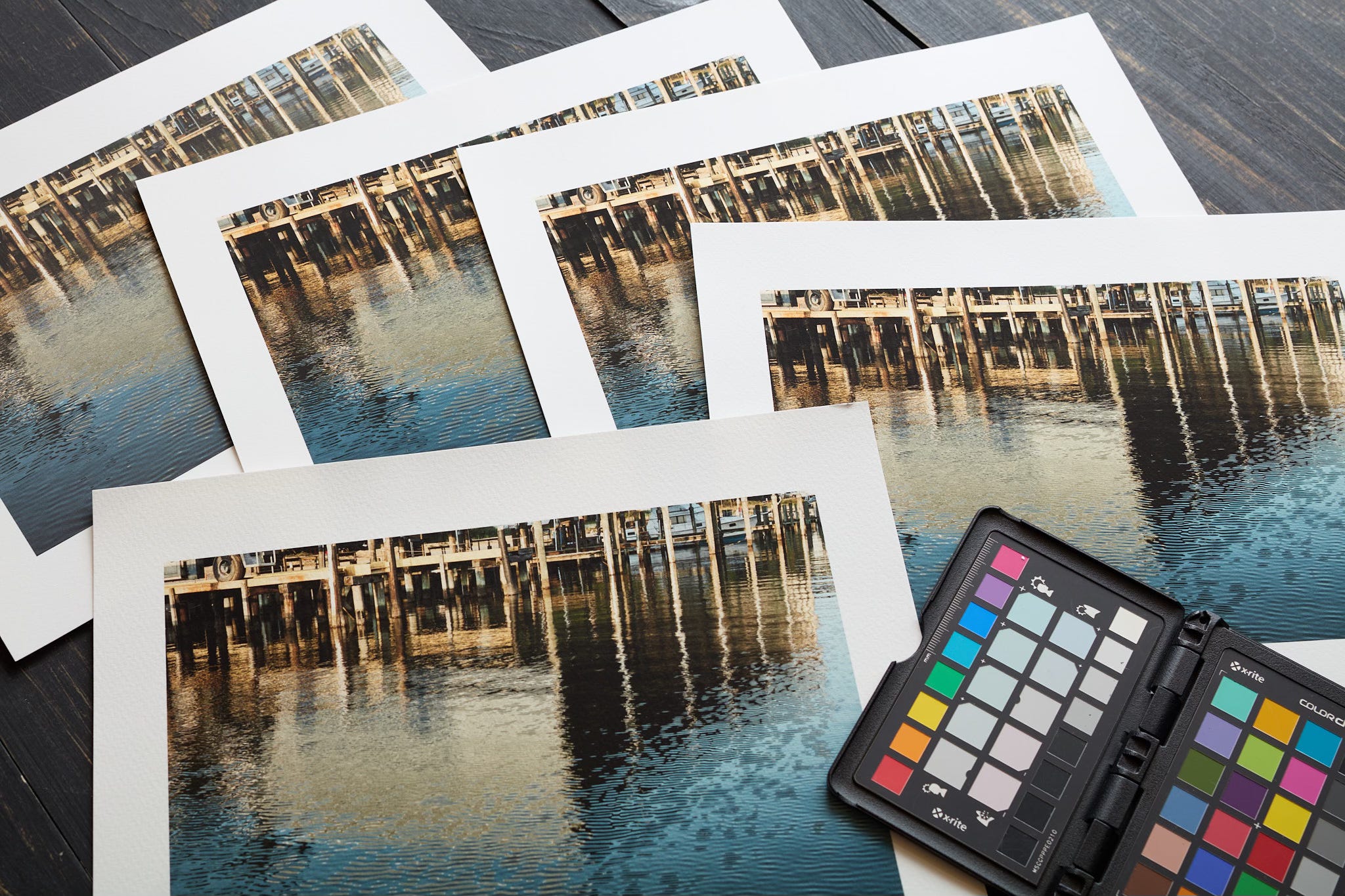
A couple of weeks ago I highlighted the disappearance of Somerset Enhanced Velvet from Moab’s website. If you’ve seen that newsletter you already know alternatives of the great Somerset line of papers with new enhanced coatings is available from Canson-Infinity. I promised to do a quick comparison between the Moab versions and the new Canson-Infinity versions. I thought something a little more in-depth beyond what you can see at the various manufacturers’ websites combined with my take might be more helpful for printers that are looking to use this paper.
The Somerset line of papers produced by St. Cathburts Mill has been around since the dawn of inkjet fine art printing in one form or another. You can read all about it and the history of that mill over on their website. For those of you in a hurry the quick answer to the question; “Are the new versions different than the old versions? The answer is yes they are different but the differences are not exactly as what I would have expected. Read on for a more detailed assessment.
Overview
Note that all of the new versions of the papers from Canson-Infinity are called “Somerset Enhanced” followed by an indicator of their surface properties that come in three varieties — satin, velvet, and watercolor. In order those are smoothest to most textured. Interesting that Moab’s version of velvet was called “enhanced velvet” so I guess the Canson is enhanced, enhanced velvet I guess? That doesn’t roll off the tongue so they went with their more logical naming scheme.
Taking a look at the opening photo of all the papers together you’ll probably not notice the differences in texture given the overview and the way I lit them with a flatter, more diffuse light source. What should stick out is that first paper in the upper left corner. The D-max of the Moab Enhanced Velvet is substantially lower than the new version from Canson. All of the others are very close if not identical in their rendering and color reproduction.
The way I have run this test was the way most of you will experience these papers if you tried them yourself. I used our Canon Pro-1000 printer in combination with the ICC profiles downloaded from the Moab and Canson sites. I printed them using the paper/media type settings recommended by Moab and Canson. Interestingly enough Moab used the built-in paper types for the Pro-1000 when creating the profiles for that printer but now uses “am1x” custom paper types for the Pro-1100. Canson on the other hand uses “am1x” custom paper types for both the Pro-1000 and the Pro-1100 for all of the new versions Somerset papers.
I bring this up because of the marked difference between the Moab and Canson versions of Enhanced Velvet relative to how close the renderings of all the other papers are. Specifically the Moab Somerset Museum Rag that uses the “Highest Density Fine Art” paper type on our Pro-1000 has a similar D-max and color rendering to all of the new Somerset papers. The Moab Enhanced Velvet uses the “Fine Art Smooth” paper type. That fact may have produced the softer, lower D-Max on the Moab version of Enhanced Velvet. Then again, there may be a good reason for using that paper type such as lack of ability to hold shadow detail with the ink density for the older coating. I’d have to make a profile for our Pro-1000 using the “Highest Density Fine Art” paper type to evaluate the difference. Alternatively, maybe I’ll try the old paper with the Canson profile and am1x custom paper type as a way to guess how much the paper type vs the new coatings have to do with that startling difference in rendition.
Moab Somerset Museum Rag v. Canson Somerset Enhanced Satin
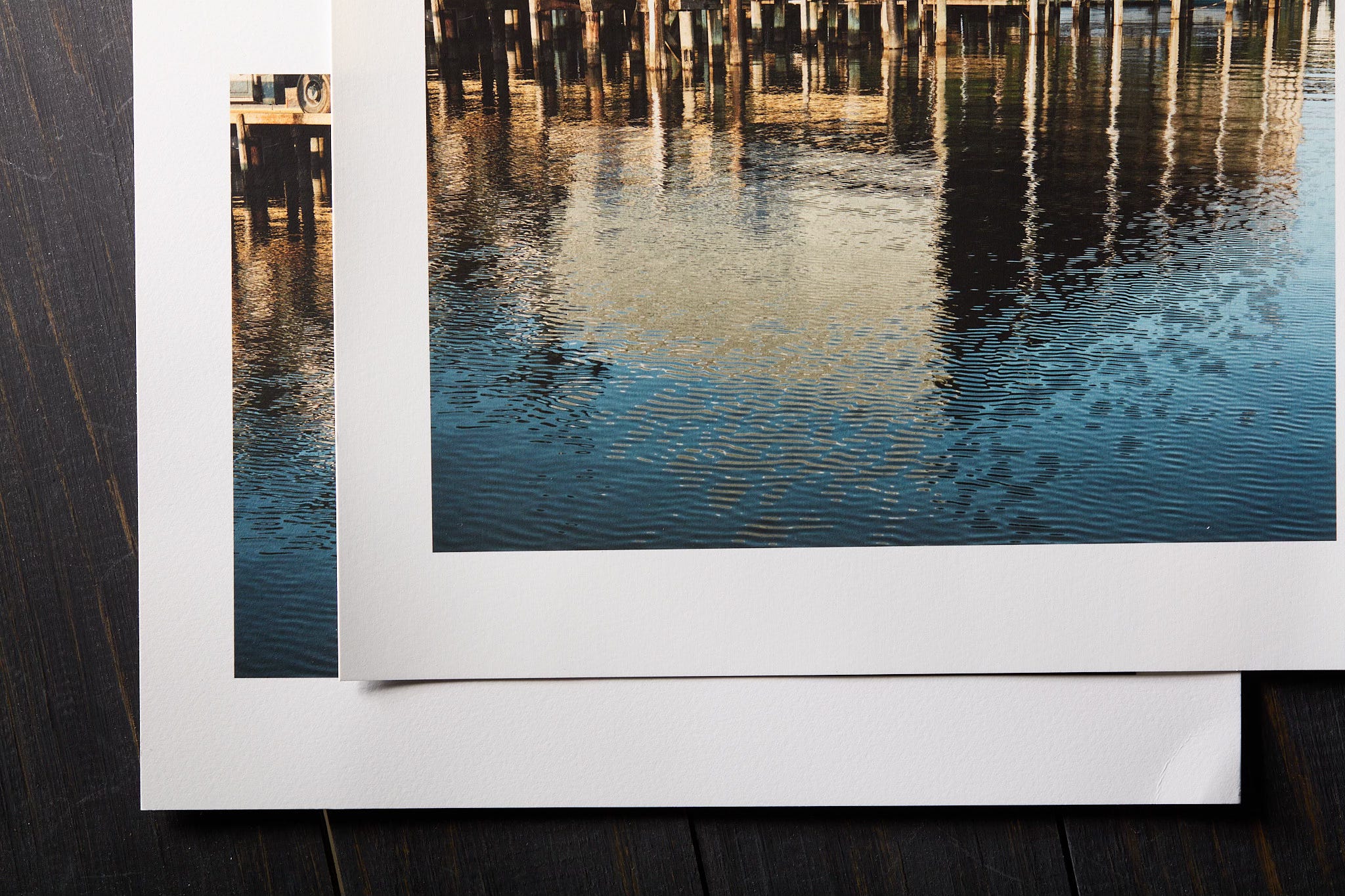
I’ve dramatically side-lit the two prints using my Mola 16” silver reflector from a distance to exaggerate the differences and texture. The rendition and color reproduction of both of these papers are nearly identical. There could be an extremely slight variation in base tone but anything you see in the photo certainly exaggerates that. I’d probably chalk any base tone difference to age of the paper or batch to batch variation. Surprisingly the Moab has slightly more texture that’s only visible on very close examination with extreme side light. In the hand both feel similar and I have always considered the Museum Rag on the smoother end of the spectrum in terms of texture.
Is the new “Satin” a direct replacement? Not exactly and I’d be cautious about combining them in the same group of prints that are made to be handled or experienced and examined at close distances. Is it a worthy substitute? Absolutely. Fantastic papers.
Moab Somerset Enhanced Velvet v. Canson Enhanced Velvet
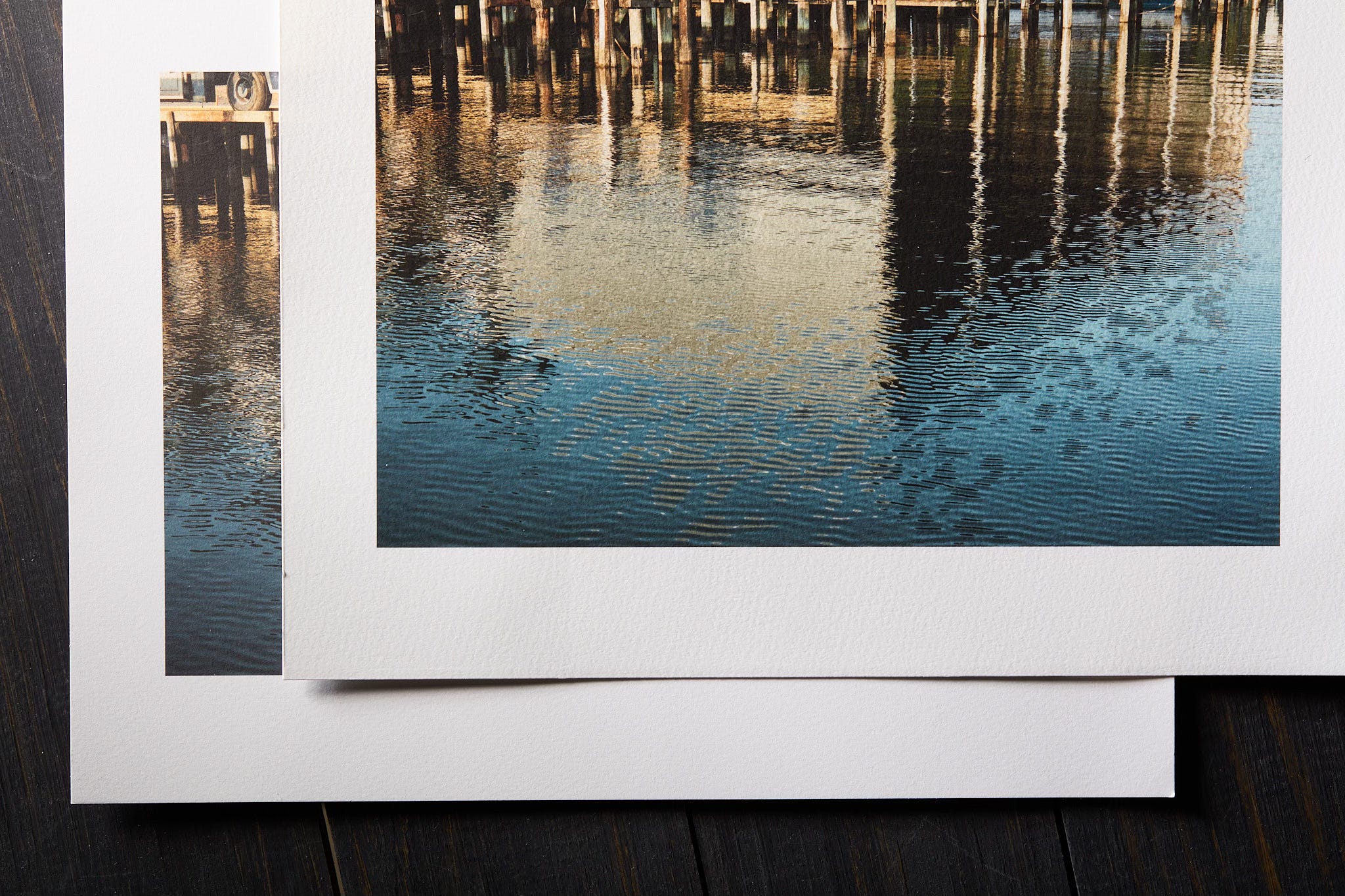
When it comes to D-Max and overall rendition these similarly named papers couldn’t be more different. Note the clear differences in the blacks. The color rendition is similar in the mid-tones but possibly a little less saturated when compared side by side. You might notice the difference even in the blacks if not compared side by side. The surface texture of the two papers is comparable but again the Moab is smoother than the new Canson version. I would definitely not use these papers on the same project. I’ve always considered the older version to have “soft blacks” and be on the moderately texture area of available papers. The newer version crosses into the highly textured territory. Again a fantastic paper that matches the rendition of the other new versions of the Somerset range.
The New Kid On The Block, Canson Somerset Enhanced Watercolor
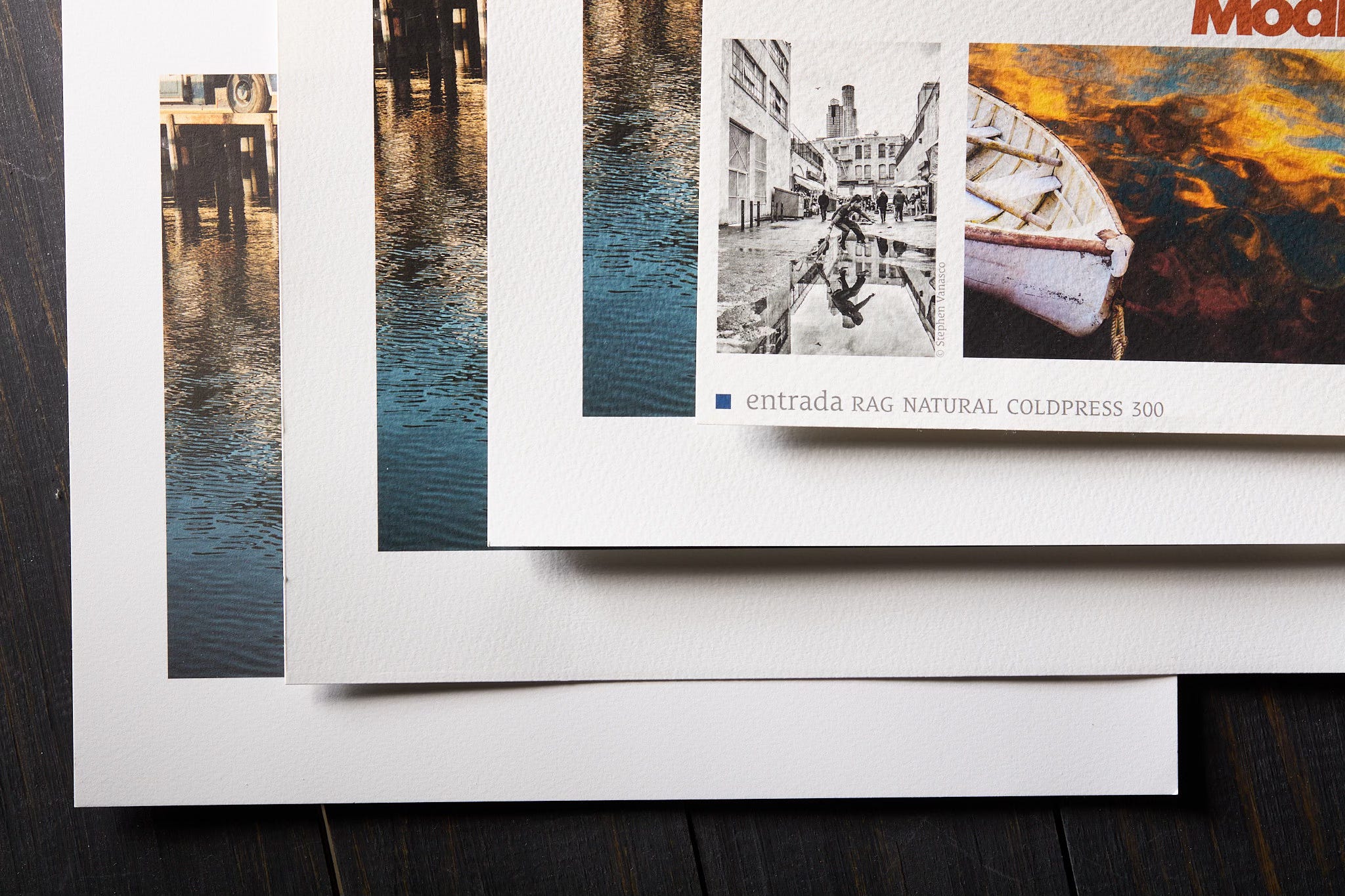
Taking a look at new Canson Somerset Enhanced Watercolor I’d have to put that into the highly to extremely textured category of papers. It’s more textured than the Moab Coldpress with a slightly more neutral based. Moab Coldpress fits somewhere between the Canson Velvet and Watercolor surface. I’d not mix the papers together for the same project. I look at the new Canson Somerset papers along with the Moab Entrada and Coldpress papers as a range of fine tuning of degree of textures both visible and in the hand. They are all worthy of the term fine art and you are certainly going to find one of them suited to complement your work.
We live in a golden age of paper choice. I’m super excited to see these Somerset papers in their newly updated range available from Canson and plan to consider them for some of my projects both past and future. The range available reminds me of that huge range of surface textures available in the heyday of black and white darkroom printing that were disappearing as I was coming of age in the 80’s, gone by the millennium. The huge advantage is these can be used to a large degree to substitute for those black and white papers but now available for both black and white and color work. Just testing these has me chomping at the bit to go out and make some work that will be a perfect match…
For all of those that help us keep the lights on with your paid subscription, a big thank you!!! If you’d like me to investigate the lower D-Max of the Moab Somerset Enhanced Velvet a little farther and push the limits of that paper let me know. Also if any of you have looked at these new Somerset papers from Canson we’d love to hear your thoughts and experiences.
I remember a blog post by Scott Martin from maybe 15 years ago discussing printer settings. He said at the time that most papers could take much more ink than what the paper manufacturers specify and had a test image that you could use to select the proper setting. The printer settings are a black box in terms of controlling ink lay down. I've not looked at this in all that much detail for the Canon Pro-1000 as I have settled in on a small number of papers. However, since Canson now says 'Fine Art Smooth' rather than 'Highest Density Fine Art' implies that the ink uptake is different. It is probably worth checking if this is the case and do some testing using the latter setting.
I was chatting with friend yesterday who does only B/W printing from his B/W Leica. He has been using Arches BFK Rives Pure White. Do you have any experience with this or the other Arches papers? I wonder how they compare with the Somerset papers or the Canson Rag Photographique (which I have printed on). I can't get some paper from him as he has a Canson 24" printer that uses rolls.
Great review of these fine papers. How would you compare these papers to Moab Entrada Bright White? I have mainly been printing on glossy and metallic papers, but fell in love with the Moab Entrada papers and using my Canon 1100 to print Giclee quality prints. And most importantly how do you choose which paper to use for what applications?